


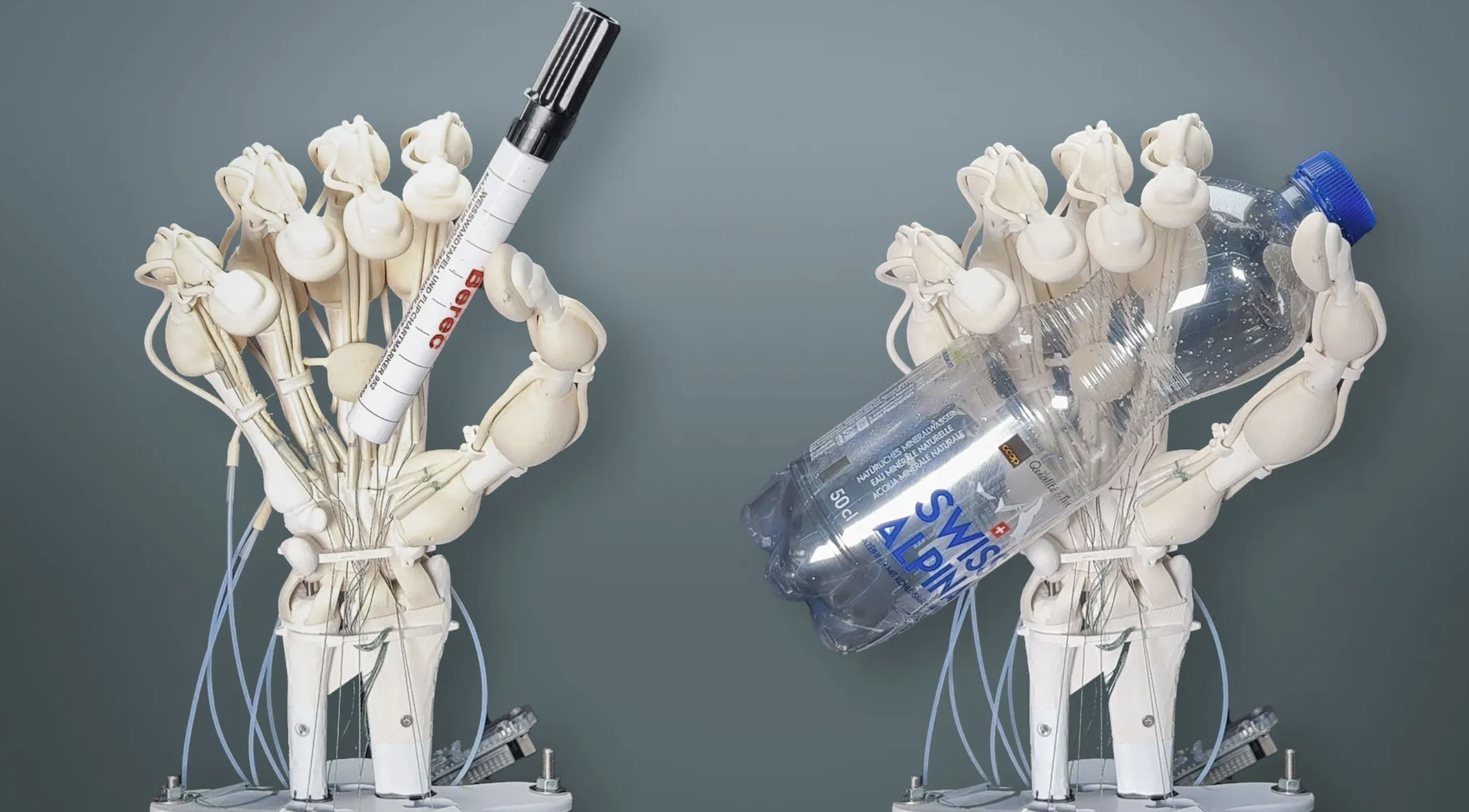
A book cover and a 3D-printed component seem to belong to different worlds. One communicates through ink, paper, and images. The other turns a digital model into a physical object. Yet both face a remarkably similar challenge: translating something designed on a screen into something that works in the real world.
That translation is never automatic. Materials behave differently from digital previews. Machines introduce variation. Finishing changes the result. A technically successful print can still disappoint the person who ordered it.
Traditional printing has spent generations developing ways to manage these problems. Three-dimensional printing brings a different perspective, encouraging designers to reconsider shape, structure, customization, and how products reach customers. Each field has knowledge the other can use.
The most useful exchange begins when we stop treating printing as a single machine operation and start seeing it as a complete process, from the first design decision to the finished product.
What 3D Printing Can Learn From Traditional Printing
1. Good production begins before the machine starts
Commercial printing has an established preparation stage: prepress. Before a brochure or book reaches the press, someone checks whether the files can produce the intended result. Are the fonts available? Is there enough bleed for trimming? Are the images suitable for the intended size? Have the colors been prepared for the production process?
Adobe’s guidance on preparing print-ready PDFs includes checking links, fonts, bleeds, margins, colors, and preflight errors. These checks make production requirements part of the design workflow, rather than leaving them until the last moment.[1]
Three-dimensional printing benefits from the same discipline. A model may look convincing on a screen while containing walls that are too thin, unsupported features, or dimensions unsuitable for the intended fit. Build orientation can also affect how an object prints and performs.
The lesson is to make a production-readiness review routine. Before a job starts, the team should agree on its purpose, material, dimensions, surface expectations, and acceptance criteria. A decorative display model and a working mechanical part require different judgments.
The earlier those judgments happen, the less time is spent discovering preventable problems after production.
2. Repeatability matters as much as a successful sample
A beautiful first print proves that a result is possible. It does not prove that a business can deliver that result reliably.
Traditional printers understand this distinction. A customer ordering another batch of packaging expects a recognizable match to the previous run. Managing color, materials, equipment, and production conditions helps make that expectation achievable.
Adobe explains that color profiles describe the behavior of output devices and printing conditions, including paper type. Accurate profiles help translate digital color values into predictable printed results.[2]
There is no simple equivalent that captures every property of a 3D-printed object. Nevertheless, the underlying principle transfers: document the conditions that produced an acceptable result, then control and verify them.
For a 3D-printing operation, that can mean recording material batches, machine settings, build orientation, maintenance, and finishing procedures. NIST’s additive manufacturing research similarly emphasizes measurement, characterization, process control, and qualification as foundations for dependable production.[3]
The practical lesson is to judge progress by the ability to deliver consistent results across jobs, not only by the most impressive object on a sample shelf.
3. Proofs help customers approve the right things
Traditional printing uses proofs to make expectations visible before a full production run. The type of proof matters: a screen preview, a physical mock-up, and a carefully controlled color proof answer different questions.
Three-dimensional printing can borrow this clarity. Customers may approve an object’s appearance while assuming they have also approved its strength, fit, or final finish. Those assumptions can become expensive misunderstandings.
A prototype should therefore come with a clear explanation of what it demonstrates. Is it showing overall size? Testing an assembly? Comparing surface finishes? Representing the final material?
Imagine a company ordering a custom presentation box with a 3D-printed insert. An early sample might establish where the products sit, while a later sample confirms the final fit and appearance. Treating these as separate approvals makes the process easier to understand.
A proof works best when everyone knows which decision it supports.
4. Finishing belongs in the original plan
A printed sheet is rarely the final product. It may need folding, binding, trimming, coating, or assembly. Experienced print teams consider these operations while planning the job because they influence both design and cost.
Three-dimensional printing has its own finishing requirements. Depending on the process, an object may need support removal, washing, curing, sanding, machining, painting, or assembly.
The transferable lesson is to estimate the complete workflow. A design that prints quickly may require substantial manual finishing. A different orientation might improve one surface while making another harder to finish.
Customers ultimately receive the completed object. Production planning and pricing should reflect every step needed to deliver it.
What Traditional Printing Can Learn From 3D Printing
5. Design the experience beyond the surface
Traditional printing already offers rich physical possibilities through paper selection, embossing, die-cutting, folding, and binding. Three-dimensional design provides a useful prompt to explore those possibilities more deliberately.
Instead of asking only what should appear on a page or package, designers can ask how someone will hold it, open it, navigate it, and use it.
For a museum publication, that might lead to a fold-out map that changes how visitors move through an exhibition. For packaging, it could mean reconsidering the opening sequence or the relationship between the outer box and its contents.
The lesson is not that every printed product needs added complexity. It is that physical structure can communicate as powerfully as imagery. Sometimes the best improvement is a simpler fold, a more comfortable format, or fewer unnecessary layers.
6. Use prototypes to answer questions earlier
Three-dimensional printing makes the value of physical prototypes easy to see. An object that looks correct digitally may reveal problems as soon as someone holds it.
The same is true of printed products. A book can look elegant in a layout program but feel awkward at its proposed size. Packaging may photograph beautifully yet be difficult to open. A display may be readable on a monitor but confusing from the distance at which customers encounter it.
Traditional printers and publishers can make greater use of early physical tests: blank paper dummies, folded mock-ups, sample bindings, and trial assemblies.
These prototypes do not need to reproduce every final detail. A plain mock-up can answer a structural question before anyone spends time perfecting graphics.
The useful habit is to identify the uncertainty first, then build the simplest sample capable of resolving it.
7. Personalization can change function
Personalization in print often begins with a name, image, or message. Three-dimensional printing encourages a broader question: what if the product itself changes to suit its user?
Traditional print businesses can apply that thinking without acquiring a 3D printer. A training workbook could contain different exercises for different roles. An event guide could be organized around a participant’s selected sessions. A product manual could include only the information relevant to the configuration the customer purchased.
These are more substantial changes than adding a personalized greeting. They affect how useful the printed item becomes.
The challenge is to keep the content accurate and the variations manageable. Personalization creates value when it helps the reader do something more easily. Extra versions alone do not guarantee a better product.
8. Reconsider the relationship between inventory and demand
Three-dimensional printing encourages discussion of producing objects when they are needed. Traditional printing can apply the same question to its own production choices, particularly where digital printing supports shorter runs.
A publisher might compare a large initial run with smaller batches that allow corrections between editions. An organization could reconsider how many brochures it stores when its information changes frequently.
Neither approach is automatically better. Larger runs may offer lower unit costs, while smaller runs may reduce storage and the risk of obsolete stock. Delivery schedules, setup costs, demand, and finishing requirements all influence the decision.
The lesson is to compare the cost of meeting actual demand, including unsold or outdated copies, rather than looking only at the price of producing each unit.
What Both Fields Should Learn Together
Both industries benefit from a more honest discussion of sustainability. Neither a familiar material nor a newer manufacturing method makes a product environmentally preferable by itself.
A useful assessment considers material inputs, energy, failed production, finishing, transport, useful life, and disposal. Producing fewer items can help, but repeated failures or difficult end-of-life handling may change the overall picture. Claims should match the evidence available for the particular product and process.
There is also room for practical collaboration. Consider a premium presentation kit: conventional printing could produce the guide and outer packaging, while 3D printing could create a custom holder or a prototype used to test the layout. The methods can serve different parts of the same customer experience.
Traditional printing contributes a strong culture of preparation, proofing, finishing, and production control. Three-dimensional printing contributes a reason to reconsider structure, physical testing, and the usefulness of each individual item.
Their shared opportunity is to make the journey from digital idea to physical product more deliberate. When designers understand materials, production teams understand the intended use, and customers understand what they are approving, better printing becomes possible in every dimension.