


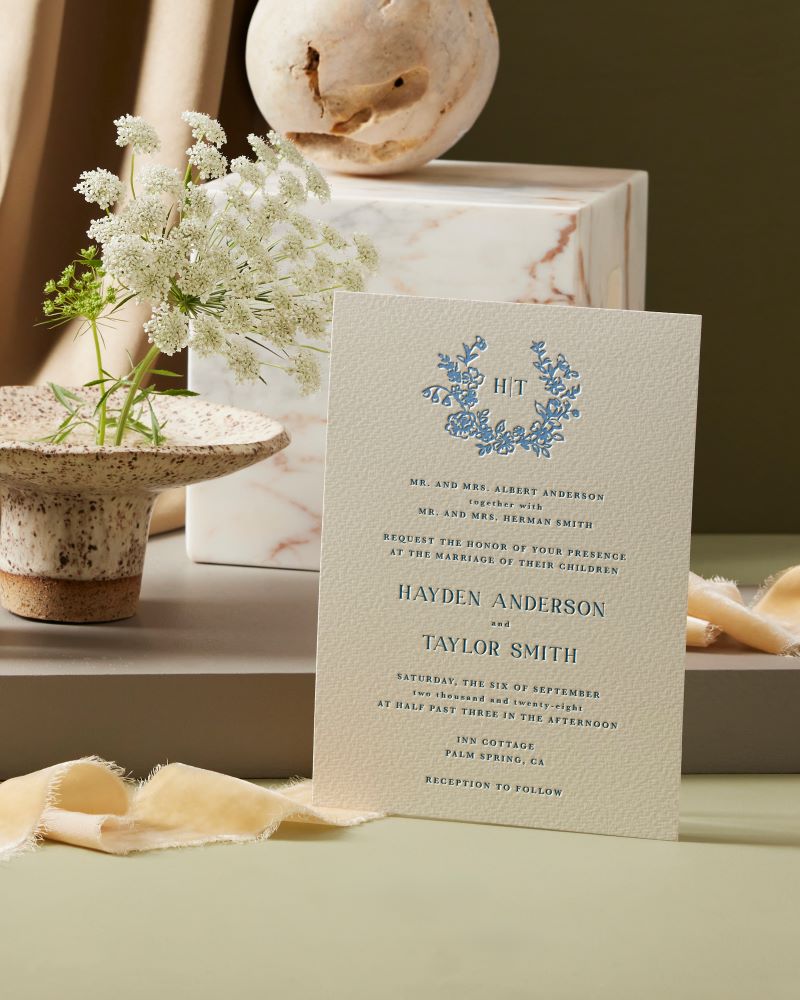
A wedding invitation arrives in the mail. You open the envelope, take out a beautifully printed card, and immediately slow down. You look at the typography, feel the texture of the paper, read the names, and perhaps keep the invitation somewhere safe.
Now imagine receiving the same information through WhatsApp:
“Hi! We’re getting married on September 20. Would love for you to come!”
The practical information is almost identical. The emotional experience is not.
In an age when invitations can be sent instantly, free of charge, to hundreds of people at once, a printed invitation can feel surprisingly meaningful. Why? Because a physical invitation communicates more than information. It communicates effort, intention, importance, and sometimes even a sense of occasion.
A Message Is Information. An Invitation Is an Object.
Digital messages are designed to disappear into a constant stream of communication. We receive notifications from friends, colleagues, businesses, group chats, social media platforms, and applications throughout the day.
A WhatsApp invitation becomes part of that stream.
A printed invitation exists outside it.
You can place it on a table, put it on a refrigerator, keep it inside a book, or save it in a drawer. It occupies physical space, which gives it a different psychological presence.
This distinction matters because objects often become associated with memories. A physical invitation can later serve as a small reminder of an event that happened months or years ago.
The paper itself becomes part of the memory.
The Effort Is Visible
One of the strongest reasons printed invitations feel important is that they make effort visible.
Sending a digital message can take seconds. Designing, printing, folding, addressing, and delivering an invitation requires considerably more intention.
That effort can be interpreted as a form of respect.
It says:
“I didn’t simply want to notify you. I wanted to invite you.”
This doesn’t mean digital invitations are impersonal or inappropriate. For many events, WhatsApp is faster, more convenient, and perfectly suitable. But when an occasion carries emotional or cultural significance, the additional effort involved in a physical invitation can change how the recipient perceives it.
The medium becomes part of the message.
Physical Touch Changes the Experience
Paper introduces something that a smartphone screen cannot: touch.
You can feel thick cardstock, embossed letters, textured paper, a ribbon, a wax seal, or a special finish. You can see how colors interact with the material and notice details that may not be apparent on a screen.
These sensory elements create a richer experience.
This is one reason luxury brands, cultural institutions, museums, restaurants, and event organizers continue to invest in physical printed materials even in highly digital environments.
A physical object can engage several senses simultaneously.
The result is not simply “better design.” It is a different type of communication.
Printed Invitations Create a Pause
Digital communication encourages speed.
We open a message, read it, respond, archive it, and move on. The next notification immediately competes for our attention.
A printed invitation creates a small interruption.
You have to physically open it. You might examine it before reading the text. You may put it somewhere visible. The experience naturally takes a little longer.
That pause can make the information feel more significant.
In a world where attention is constantly fragmented, creating a moment of deliberate attention can itself be valuable.
The Psychology of Permanence
There is also something psychologically powerful about permanence.
Digital messages can be deleted, buried under hundreds of conversations, or forgotten when a phone is replaced. Even when they remain technically accessible, they often become difficult to find.
A physical invitation does not depend on a search bar.
It can remain on your desk for weeks.
You can see it without opening an application.
You can accidentally encounter it again.
That physical persistence can reinforce the importance of the event and make the invitation function almost like a small reminder card.
Printed Invitations Can Become Keepsakes
Some invitations are designed to be discarded after the event. Others become keepsakes.
A wedding invitation might be stored with photographs. A museum opening invitation might become part of someone’s personal archive. A graduation invitation might be kept for years.
The more distinctive the design, the more likely the invitation is to acquire a second life as a memory object.
This is particularly interesting when the printed piece reflects the identity of the event.
The paper, typography, illustrations, photography, colors, and finishing can all communicate something about the occasion before the recipient even reads the details.
The invitation becomes an introduction to the experience.
The Design Says Something Before the Words Do
Communication doesn’t begin with the first sentence.
It begins with appearance.
A formal invitation printed on heavy paper immediately creates a different expectation from a casual text message. Minimalist typography can suggest sophistication. Bright colors can suggest celebration. Handmade paper can create a sense of intimacy. An unusual format can signal creativity.
This is why print design remains important for events.
The invitation can establish the visual language of the occasion before the guest arrives.
In that sense, it functions almost like a trailer for the event itself.
Why This Matters for Businesses and Organizations
The difference between digital and printed invitations isn’t limited to weddings or private celebrations.
Businesses can use physical invitations for openings, exhibitions, conferences, product launches, cultural events, VIP gatherings, and special announcements.
A digital invitation may be efficient for reaching a large audience. A printed invitation can be particularly useful when the goal is to make a recipient feel personally selected.
This distinction can be especially relevant for small guest lists.
If someone receives a beautifully produced invitation addressed specifically to them, the physical object can communicate exclusivity and attention in a way that a mass WhatsApp message may not.
Print Doesn’t Have to Replace Digital
The real question isn’t whether printed invitations are better than WhatsApp messages.
They serve different purposes.
WhatsApp is immediate, convenient, flexible, and interactive. It is excellent for reminders, confirmations, updates, last-minute changes, and communicating with large groups.
Print is tangible, memorable, slower, and more ceremonial.
The two can work together.
An organization might send a beautifully printed invitation first and use WhatsApp later for a reminder. A couple might mail formal wedding invitations and then create a digital group for practical information. An exhibition might use printed invitations for key guests while promoting the event digitally to a wider audience.
Instead of choosing between print and digital, communicators can use each medium for what it does best.
In a Digital World, Physical Things Can Feel More Valuable
Perhaps the most interesting reason printed invitations feel important is precisely because we receive so few of them.
When everything is digital, physical communication becomes more noticeable.
A printed invitation asks for attention. It occupies space. It requires effort. It can be touched, displayed, stored, and remembered.
And that scarcity gives it emotional weight.
A WhatsApp message can tell you where to be and when to arrive.
A printed invitation can make you feel that your presence matters.
That is ultimately the difference.
The value of a printed invitation isn’t simply in the information printed on the paper. It lies in the combination of design, material, effort, ritual, and memory.
In a world of instant messages, sometimes taking the long way around is exactly what makes a message feel important.