


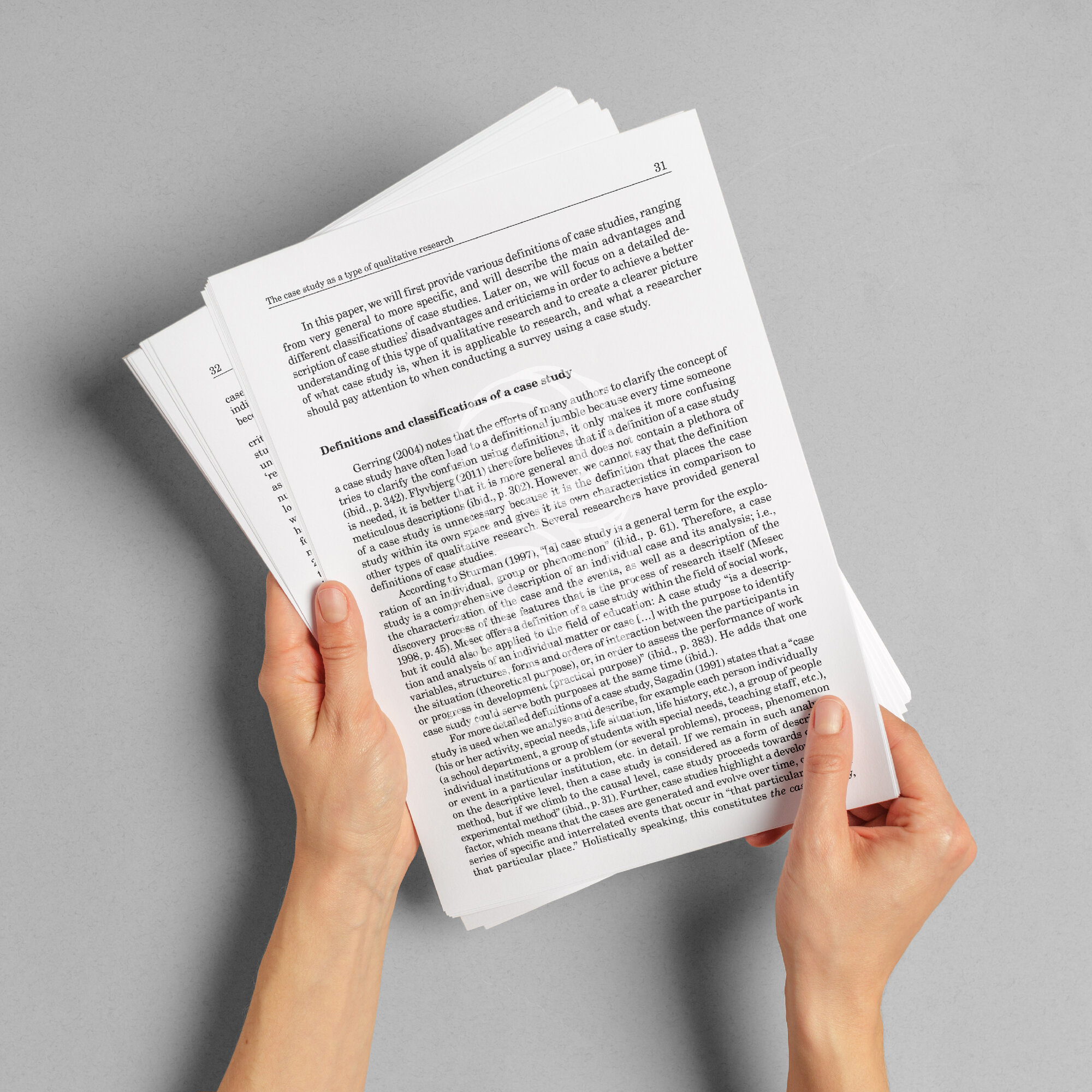
We live in a world where most information appears on screens. Contracts are signed digitally, reports are shared through cloud platforms, invitations arrive by email, and important announcements can be distributed to thousands of people with a single click. Yet despite the convenience of digital communication, something interesting happens when information is printed on paper: people often treat it differently.
A printed document can feel more official, permanent, and important than exactly the same information displayed on a screen. A digital report may be opened, skimmed, and forgotten. A printed report placed on a desk often receives more deliberate attention. A physical contract feels more consequential. Even a simple printed invitation can create a stronger sense of occasion than a message sent through an app.
Why does paper have this effect?
Paper Creates a Sense of Permanence
One of the most obvious differences between digital and printed information is the feeling of permanence.
Digital documents are remarkably easy to change. A file can be edited, renamed, replaced, moved to another folder, or deleted in seconds. Even when a document is technically final, the digital environment surrounding it constantly communicates that information is temporary and editable.
Paper behaves differently.
Once something has been printed, changing it requires a new physical action. If there is an error, another copy must be produced. If a contract has been printed and signed, the physical object becomes a record of something that happened.
This does not mean printed documents are inherently more trustworthy. A printed document can contain mistakes, misinformation, or outdated information just as easily as a digital one. But the physical form creates a psychological impression of stability.
Paper says, in effect: this information has been fixed into a form.
That can make people approach it with greater attention.
Physical Objects Feel More “Real”
Human beings are physical creatures. We interact with the world through touch, sight, movement, and space. A digital document exists as information on a screen, but a printed document occupies physical space.
You can hold it, put it on a desk, place it in a folder, sign it, annotate it, file it, or hand it to someone else.
These physical interactions can give information a stronger sense of reality.
Think about the difference between receiving a digital certificate and receiving a beautifully printed certificate in a presentation folder. The information might be identical, but the experience is not. The printed version becomes an object rather than simply a collection of words.
This is particularly important for documents connected with achievement, authority, identity, or important events.
Diplomas, certificates, awards, official letters, architectural plans, passports, books, business proposals, and legal documents are often printed precisely because their physical presence carries meaning.
Printing Requires a Deliberate Action
Digital information is effortless to produce and distribute.
You can write an email, attach a document, and send it to hundreds of people without ever leaving your chair. You can download a report in seconds. You can copy and paste text almost infinitely.
Printing introduces friction.
Someone has to prepare the file, choose the paper, check the layout, send it to the printer, collect the pages, and often organize or bind them. Even modern automated printing involves a physical process that digital communication does not.
This extra effort can influence how people perceive the result.
When something requires effort to produce, we may subconsciously assign it greater value. A printed proposal can therefore communicate not only its actual content but also the message that someone considered the material important enough to make tangible.
The effect becomes even stronger when printing is carefully executed.
Good typography, appropriate paper, accurate color reproduction, clean finishing, and thoughtful binding can transform an ordinary document into something that feels considered and professional.
Printed Documents Slow Us Down
Screens encourage speed.
We scroll. We click. We switch between tabs. We receive notifications. We jump between emails, messages, websites, and applications.
Paper removes many of these distractions.
When someone sits down with a printed document, the experience is often slower and more focused. They may underline important passages, make notes in the margins, turn pages, or physically mark sections they want to revisit.
This can change not only how seriously the document feels but also how deeply it is processed.
A printed report sitting on a conference table is difficult to ignore in the same way an unopened PDF inside an email inbox can be ignored.
The physical document becomes part of the environment.
The Desk Test
There is a simple experiment that demonstrates this difference.
Imagine that a manager receives two versions of the same 20-page business proposal.
The first arrives as a PDF attachment.
The second is printed on high-quality paper, professionally bound, and placed directly on the manager’s desk.
The manager may still prefer the digital version for convenience. But the printed document has a physical presence. It remains visible after the computer is closed. It can be picked up during a meeting. Another person can flip through it. Pages can be marked.
The document is no longer hidden behind a screen.
It occupies attention.
This is one reason printed materials remain valuable in business environments despite the dominance of digital communication.
Printing Can Signal Effort and Respect
There is also a social dimension to printed documents.
Giving someone a physical document can communicate that their time, role, or participation matters.
Consider a printed event programme. It could easily be replaced with a QR code. But when guests receive a well-designed programme at the entrance, it becomes part of the experience. It tells them that the organizers have thought about how information will be presented.
The same applies to business meetings.
A printed agenda, presentation, proposal, or briefing document can make a meeting feel more structured. Participants have something in front of them that establishes a common reference point.
The paper itself becomes part of the communication.
Design Influences Perceived Importance
Not every printed document automatically feels serious.
A poorly printed document with inconsistent typography, weak paper, incorrect margins, blurry images, or inaccurate colors can have the opposite effect.
This is where printing becomes more than simply transferring digital information onto paper.
The physical characteristics of a document influence how its content is perceived.
Paper thickness, texture, size, typography, color, binding, folding, finishing, and even the quality of the printed images contribute to the overall impression.
A legal contract and a restaurant menu have different purposes, so they should not necessarily look or feel the same.
Professional printing allows the physical format to reinforce the character of the information.
A premium annual report might use heavier stock and sophisticated finishing. A technical manual may prioritize durability and readability. An invitation may use texture, special colors, or unusual formats to create anticipation.
The printing process becomes part of the message.
The Psychology of Ownership
Printed documents can also create a stronger sense of ownership.
A digital file may belong to someone technically, but it remains abstract. A physical document can become a personal possession.
A signed book, certificate, handwritten letter, printed photograph, or annotated report can acquire meaning because it becomes connected to a particular person and moment.
People often keep physical documents for years, even when digital copies exist.
The reason is not always practical.
Sometimes the object itself becomes part of the memory.
Paper Can Make Information Feel More Official
Institutions have historically used physical documents to demonstrate authority.
Official seals, signatures, letterheads, stamps, certificates, embossed marks, and carefully printed forms have long been associated with institutions and formal processes.
Although digital systems now provide sophisticated ways of authenticating documents, these visual traditions remain powerful.
A printed document can therefore benefit from a cultural association that has developed over centuries: important information deserves an official physical form.
This is why a printed certificate can feel like an achievement in a way that an email congratulating someone does not.
The words may be similar.
The experience is not.
The Future Is Not Paper Versus Digital
The growing importance of digital communication does not mean printed documents are disappearing completely.
Instead, the two formats are increasingly serving different purposes.
Digital documents are ideal for speed, collaboration, storage, searchability, and distribution. Printed documents are particularly powerful when attention, permanence, presentation, physical interaction, or emotional significance matters.
The smartest communication strategies often combine both.
A report can be distributed digitally while key stakeholders receive a printed edition. An event can use QR codes while still providing a beautifully designed programme. A business proposal can be emailed in advance and presented physically during a meeting.
The future of printing may therefore be less about replacing digital communication and more about understanding when physical communication has something unique to offer.
Why Paper Still Matters
People do not necessarily take printed documents more seriously because paper is inherently better than a screen.
They take them seriously because physical objects change the way we interact with information.
Paper creates permanence. Printing requires effort. Physical documents occupy space. They slow us down. They can communicate respect, importance, achievement, and attention to detail.
In a world overflowing with instant digital information, these qualities have become surprisingly valuable.
Perhaps that is the real power of printing.
A digital document says, “Here is some information.”
A carefully produced printed document can say, “This matters enough to exist in the physical world.”