


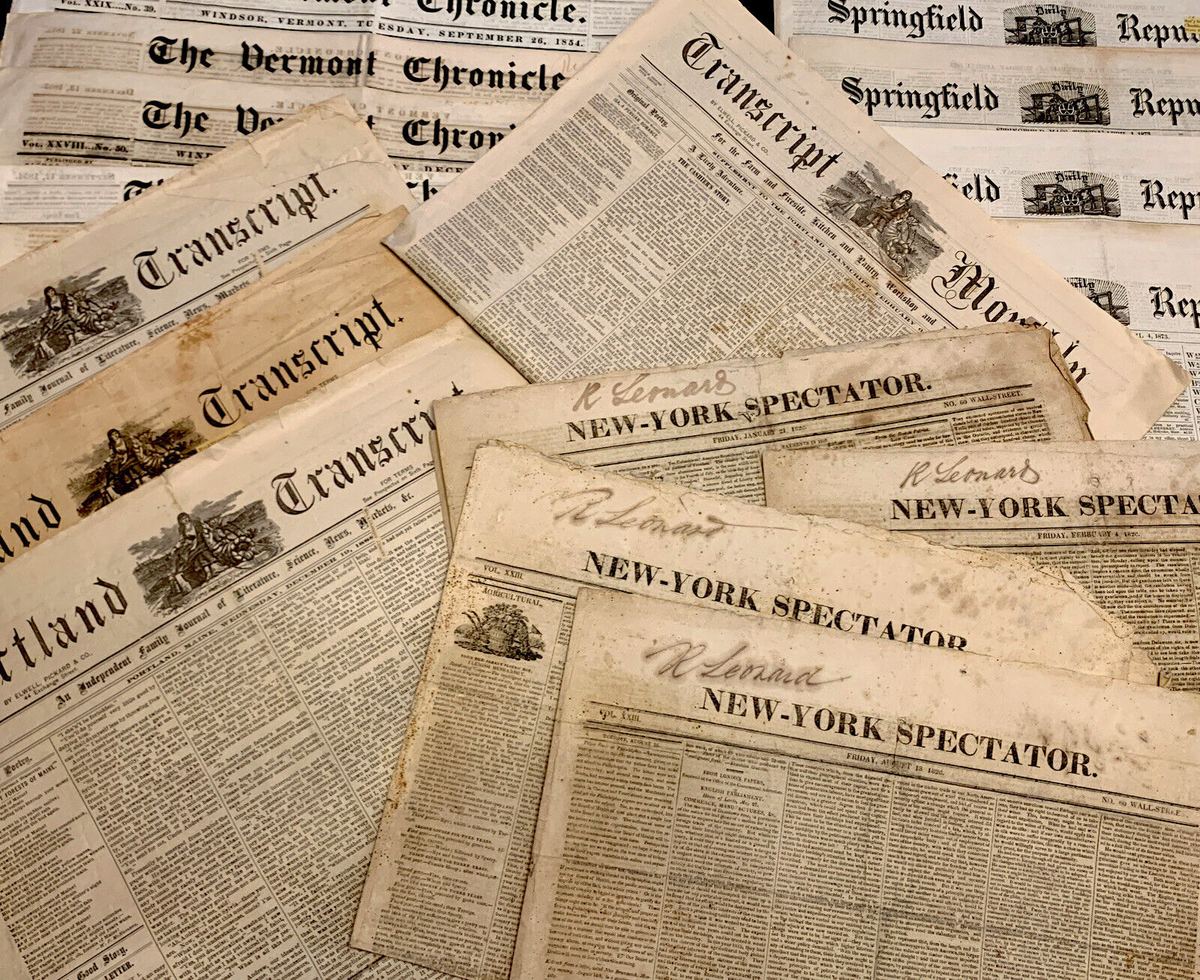
Someone bought that newspaper because they wanted to know what had happened yesterday.
Perhaps they read it over breakfast, folded it under an arm on the way to work, or borrowed it from a neighbour. They checked the headlines, glanced at the advertisements, looked for a familiar name. Once finished, they might have used it to wrap something fragile.
A century later, that ordinary object has become evidence.
We usually turn to history books to understand the past. They connect events, explain consequences and help us see patterns across decades. But an old newspaper offers something different: a day before anyone knew how it would turn out.
Its readers were living through what we now call history. They were also looking for jobs, choosing entertainment, worrying about prices and wondering whether tomorrow would be better.
The Future Was Still Undecided
A history book knows what happened next. A newspaper does not.
That difference changes everything.
In a historical account, an election might appear as the beginning of a political transformation. In the newspaper published before it, the result remains uncertain. Commentators disagree. Candidates make promises. Readers encounter predictions that may eventually prove embarrassingly wrong.
Even an event that later becomes a turning point can share a page with a minor scandal or an announcement about road repairs.
Reading these stories restores uncertainty to the past. It reminds us that people did not experience their lives as a sequence of inevitable developments. They had incomplete information, competing explanations and reasons to hope for several possible futures.
Knowing the outcome can make history seem orderly. A newspaper reveals how confusing it felt while it was happening.
Advertisements Preserve Everyday Desire
Some of the most revealing material in an old newspaper was placed there to sell something.
Advertisements record what businesses believed people wanted: fashionable clothes, comfortable homes, better health, professional success or relief from exhausting household work.
A furniture advertisement can suggest how a desirable home was imagined. An advertisement for lessons can reveal which skills promised advancement. A beauty product can show the appearance women were encouraged to pursue, while the wording of a job advertisement may expose assumptions about gender, age and social position.
These messages deserve careful reading. An advertisement does not prove that everyone owned a product or accepted its promise. It shows someone trying to persuade a particular audience.
That attempt itself is valuable evidence. It tells us which anxieties could be exploited and which aspirations seemed worth paying for.
History books can explain economic change. Advertisements let us examine the language used to bring that change into someone’s kitchen, wardrobe or working life.
Small Notices Reveal the Shape of a Community
Then there are the brief announcements that barely qualify as news.
A room is available to rent. A shop has moved. A family thanks those who attended a funeral. Someone has lost a watch and offers a reward.
Each notice contains a fragment of a life.
Together, they reveal how people found accommodation, maintained social connections, exchanged goods and marked important occasions. Repeated addresses can help reconstruct a commercial neighbourhood. Entertainment listings can show where people gathered after work. Notices about clubs and associations suggest which interests brought strangers together.
These details are particularly useful when studying people who left no memoirs, published correspondence or official biographies.
Someone may appear in the historical record only because they advertised a service or announced a marriage. That small appearance can still tell us something meaningful about their place in the world.
Prices Make the Past Tangible
A history book might describe a period as prosperous or economically difficult. A newspaper supplies figures: the price of bread, a train ticket, a theatre seat or a furnished room.
Those numbers need context. A cheap-looking price means little without knowing wages, working hours and household expenses. Newspaper advertisements also represent particular offers rather than an entire economy.
Still, comparing prices with reported earnings can make broad historical conditions easier to grasp.
How much of a weekly wage might rent consume? Was a concert an occasional treat or an inaccessible luxury? What did a family need to spend before it could buy anything beyond necessities?
Such questions bring economic history closer to lived experience. They help us imagine the decisions made at a counter or around a kitchen table.
The Page Shows What Editors Considered Important
A newspaper communicates through its layout as well as its words.
The largest headline commands attention. A photograph gives a story prominence. Another event receives a few lines near the bottom of the page.
These choices reveal an editorial view of the world.
Comparing newspapers published on the same date can be especially illuminating. One may celebrate a decision that another condemns. They may describe the same crowd with different words, quote different witnesses or disagree about what deserves front-page coverage.
A newspaper therefore records both events and the effort to shape their meaning.
Its language can expose prejudice, political loyalty, commercial interests and assumptions that readers were expected to share. Even an apparently routine description may reveal who was treated with respect and who was dismissed.
Silence Is Evidence, Too
For all their richness, newspapers offer an uneven record.
Editors selected what to publish. Censorship could limit coverage. Owners and advertisers could exert pressure. Some communities had far greater access to the press than others.
A newspaper’s silence about hardship does not establish that hardship was absent. A confident report does not guarantee accuracy.
This is where historical scholarship remains essential. Researchers compare newspapers with letters, official records, photographs, oral testimony and other evidence. They investigate contradictions and ask whose perspective is missing.
The newspaper and the history book are most useful together: one preserves the immediate account; the other helps us evaluate it.
Yet there is a particular intimacy in turning an old newspaper’s pages. A major political announcement sits beside a cinema listing. An anxious editorial shares space with an advertisement promising an easier life.
The people reading those pages had no reason to imagine us studying them a century later. They were trying to get through their own day.
That is what an old newspaper allows us to recover: the extraordinary past, still mixed with ordinary life.