


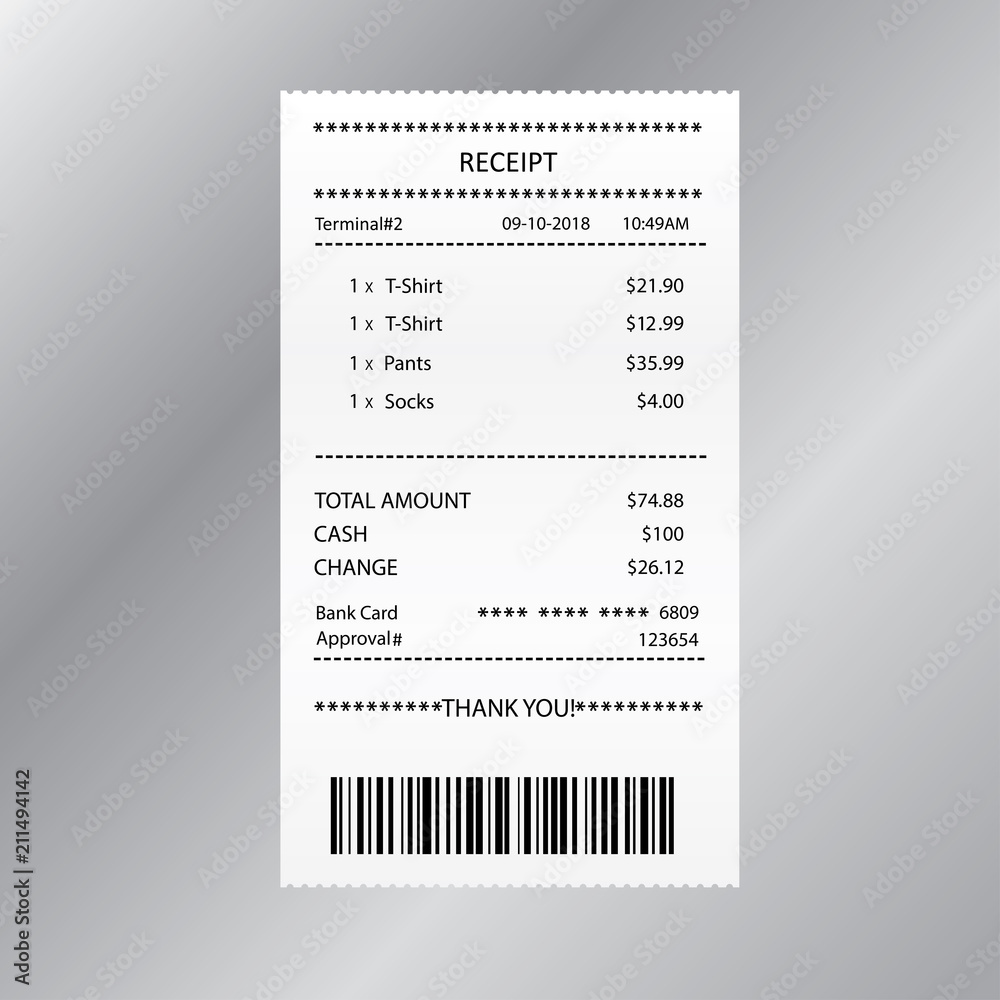
You buy toothpaste, coffee and a birthday card. At the checkout, a receipt prints before you have finished putting everything in your bag. You glance at the total, fold the slip and forget about it. For you, the transaction is over. For the retailer, it has just become a record that can be counted, compared and, in some cases, linked to what you bought last week.
That difference explains how a routine piece of paperwork became a source of insight into consumer behavior. The receipt still answers a familiar question: What did I pay for? When a retailer can connect transactions over time, it can start asking another: What might this customer buy next?
From handwritten slip to searchable record
The earliest form of a receipt is easy to imagine: a merchant writes down what changed hands, how much was paid and when. A handwritten acknowledgment gives both sides something to refer to if a payment is disputed. The cash register standardizes the process. A printed slip can show the items, the amounts and the total in a consistent format, even when a shop serves hundreds of customers in a day.
Barcode scanners and computerized checkout systems change what happens behind the counter. Instead of recording a generic sale under “groceries,” a store can distinguish between sizes, flavors and brands. Each sale can update inventory and contribute to a report showing what sold, at which location and at what price. Thermal printers make the customer’s copy quick to produce, while the checkout system keeps a record the retailer can search.
Email and app receipts change how customers retrieve that record. A slip might fade in a wallet or disappear into a coat pocket. A digital receipt can turn up months later in an inbox search for a product name. It can also sit inside an account alongside a purchase history, making it easier to find a past order, reorder an item or request a return.
What a shopping basket can tell a store
Imagine a supermarket that sells plenty of tortillas and plenty of salsa. Those totals help it decide how much stock to order. Looking at the items on individual receipts tells the store something else. Do people buy tortillas and salsa together? Are shoppers more likely to add salsa when tortillas are on promotion? Does the pattern change on weekends?
The answers can influence which products sit next to each other, how promotions are designed and how much stock a specific branch carries. A discount may increase sales of one product while drawing customers away from another. A promotion that looks successful in a weekly sales report may yield a different picture once the retailer looks at what else shoppers bought in the same transaction.
None of this requires a store to know a shopper’s name. A basket can reveal a relationship between products on its own. A customer identifier, such as a loyalty account, lets the retailer ask questions about patterns across multiple visits. Someone who buys the same coffee every three weeks may be a good candidate for a reminder or an offer on their usual brand. A customer who switches between brands whenever one goes on sale may respond better to a discount than to a message about a new flavor.
What the receipt leaves out
A receipt records the decision that made it to the checkout. It rarely captures the decisions that came before it. A shopper who buys oat milk three weeks in a row might prefer it, be hosting a guest or be shopping at a store that keeps running out of their usual milk. A customer who buys a skincare set every December might be a loyal user or simply have found a reliable holiday gift.
Returns complicate the picture, too. A clothing receipt shows which size someone bought. The return record might show that they exchanged it for another size. Neither record necessarily explains whether the first item fit badly, was intended for someone else or was ordered alongside a second size to try on at home.
That distinction matters when a retailer acts on its predictions. If a store treats one discounted purchase as evidence of a lasting preference, it may spend months recommending a product the customer bought once because it was cheap. A transaction is a reliable record of what was purchased. Understanding why takes more context.
When a purchase becomes personal
A receipt for a notebook and a pen reveals little about the person who bought them. A year of purchases tied to the same account may suggest when someone shops, which branches they visit, how often they wait for discounts and which products they buy regularly. Some purchases can hint at changes in a household or an interest in a health-related product. The more transactions a retailer can connect, the more detailed those inferences can become.
The format of the receipt tells you surprisingly little about that process. A paper slip can come from a transaction already linked to a loyalty account. An emailed receipt can simply be a convenient copy of a single sale. The important questions are what information the retailer uses to connect purchases, how long it keeps that history and what else it does with it.
For a customer, the difference can be easy to miss at the register. Giving an email address to receive a receipt feels like a small decision about where to put the paperwork. Receiving a product recommendation a week later feels like a decision about marketing. Both can begin with the same checkout interaction.
Why the paper slip still matters
A printed receipt has a clarity that still feels useful. You can check whether a discount went through before leaving the shop, put the slip in a gift bag or hand it to someone who needs to submit an expense. A digital receipt solves a different everyday problem. You can find the purchase after the paper would have faded, or pull up an exact order while speaking with customer service.
A good receipt, in either format, makes the transaction easy to understand. It shows what you bought, what you paid and what information you need if something goes wrong. If the retailer also uses the transaction to build a purchase history or tailor offers, that use should be easy to understand as well.
The next time you look at a receipt, notice the details you usually skip. The time, store location, product names and discounts are minor facts when you are checking the total. Put them alongside hundreds of other transactions and they can help a store decide what to stock, what to put on sale and what to offer you on your next visit.