


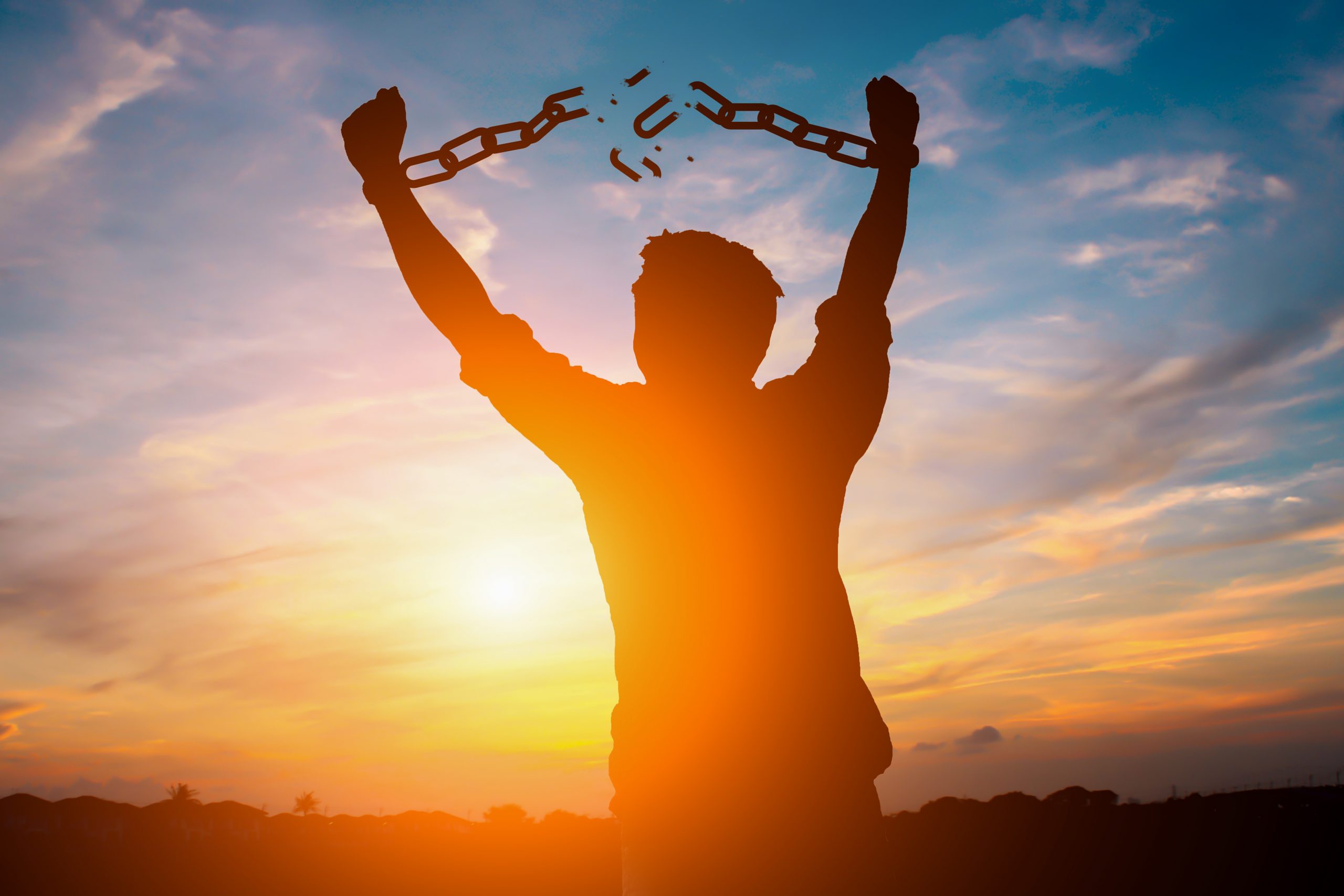
Freedom is one of the most powerful and elusive ideas in human thought. It inspires revolutions, shapes identities, and fuels both personal and collective struggles. Yet, for all its importance, freedom is not a fixed or universally agreed-upon concept. What does it mean to be free? Is freedom the absence of constraints, or the ability to act with purpose? Is it political, psychological, moral—or all of these at once?
Writers across centuries and cultures have wrestled with these questions, using literature as a space to test, challenge, and redefine freedom. Through characters, narratives, and symbolic worlds, they expose its complexity, its costs, and its contradictions. In doing so, literature does not offer simple answers; instead, it invites readers into a deeper, more nuanced understanding of what freedom might truly mean.
Freedom as Liberation from External Constraints
One of the most immediate ways writers approach freedom is by portraying it as liberation from external oppression—political, social, or economic. In such works, freedom is often framed as a struggle against systems that restrict autonomy.
Stories of enslavement, colonization, authoritarian rule, or rigid social hierarchies frequently center on the desire to break free from imposed limitations. Characters in these narratives often confront institutions that deny them agency, whether through force, law, or tradition. Their journeys toward freedom become acts of resistance, emphasizing courage, sacrifice, and collective action.
However, writers rarely romanticize this process entirely. They show that liberation is difficult and often incomplete. Even when characters achieve physical freedom, they may still face the lingering effects of oppression—trauma, inequality, or internalized limitations. In this way, literature reveals that freedom is not simply a moment of escape, but an ongoing process.
The Inner Dimension: Psychological and Emotional Freedom
While external freedom is crucial, many writers turn inward to explore a different dimension: the freedom of the mind and spirit. Psychological freedom raises a more unsettling question—can a person be physically free but internally trapped?
Characters may be bound not by chains, but by fear, guilt, memory, or social conditioning. In such narratives, the struggle for freedom becomes deeply personal. It is about confronting internal barriers, questioning inherited beliefs, and overcoming self-imposed limitations.
This type of freedom is often harder to define and achieve. A character may escape an oppressive environment, only to discover that their thoughts and emotions remain constrained. Writers use this tension to suggest that true freedom requires self-awareness and transformation. It is not enough to change one’s circumstances; one must also change one’s relationship to those circumstances.
In many cases, literature suggests that inner freedom is both more fragile and more profound than external freedom. It cannot be granted by others, nor easily taken away—it must be cultivated.
Freedom and Responsibility
Another key theme in literary explorations of freedom is its relationship with responsibility. Absolute freedom, if it exists at all, can be overwhelming. Without constraints, how does one choose a path? What gives life direction or meaning?
Writers often present characters who are suddenly confronted with the burden of choice. Instead of feeling liberated, they feel lost. Freedom, in this sense, becomes a source of anxiety rather than empowerment.
This idea is particularly prominent in works that examine existential questions. Characters are forced to confront the fact that they are responsible for their own actions and identities. There is no predetermined script, no external authority to dictate their purpose. While this realization can be liberating, it can also be deeply unsettling.
Through these narratives, writers suggest that freedom is inseparable from responsibility. To be free is to be accountable—for one’s decisions, one’s values, and the consequences that follow. Freedom, then, is not merely about having options; it is about making meaningful choices.
Social Freedom and Its Limits
Freedom is not experienced in isolation. Writers frequently explore how individual freedom interacts with society, raising questions about its limits. How free can one person be without infringing on the freedom of others? What happens when personal desires conflict with collective norms?
Literature often depicts societies that attempt to regulate freedom in the name of order, morality, or security. These settings provide fertile ground for examining the tension between individual autonomy and social cohesion.
Some works critique societies that impose excessive restrictions, portraying them as stifling, unjust, or even dystopian. Others highlight the dangers of unchecked freedom, where the absence of structure leads to chaos or inequality. In both cases, writers emphasize that freedom is not absolute—it exists within a network of relationships and obligations.
Through these explorations, literature encourages readers to think critically about the balance between personal liberty and social responsibility. It asks whether true freedom is possible without some form of limitation, and whether those limitations can ever be truly fair.
Freedom and Identity
For many writers, freedom is closely tied to the question of identity. To be free is, in part, to define oneself—to choose who one is, rather than simply accepting imposed roles or labels.
Characters often struggle against identities assigned to them by family, culture, or society. These identities may be based on gender, class, race, or tradition. The act of rejecting or redefining these roles becomes a form of liberation.
However, this process is rarely simple. Identity is not something that can be discarded overnight. It is shaped by history, relationships, and context. Writers often show that the pursuit of freedom can involve a painful negotiation between past and present, belonging and independence.
In some narratives, characters discover that complete self-definition is an illusion. They are always, to some extent, shaped by the world around them. Yet within those constraints, they can still carve out a sense of agency. Freedom, in this sense, becomes not the absence of influence, but the ability to engage with it consciously.
The Paradox of Freedom
One of the most compelling insights literature offers is that freedom is inherently paradoxical. It is something people desire intensely, yet it often comes with uncertainty, risk, and even suffering.
Writers explore how freedom can lead to isolation. Without the structures that once defined them, characters may feel disconnected or adrift. Relationships may become strained as individuals pursue their own paths. The very independence that freedom provides can create distance between people.
At the same time, literature shows that the absence of freedom is equally fraught. Oppression, conformity, and lack of choice can lead to stagnation, resentment, and loss of self. The tension between these two extremes—too much freedom and too little—creates a dynamic space in which stories unfold.
By presenting these contradictions, writers resist simplistic definitions of freedom. They suggest that it is not a final state to be achieved, but a condition to be continually negotiated.
Symbolism and Metaphor in Depicting Freedom
Writers often use symbolic language to explore freedom in more abstract ways. Open landscapes, journeys, flight, and the sea frequently serve as metaphors for liberation. Conversely, confined spaces—prisons, rooms, rigid structures—represent restriction.
These symbols allow writers to convey the emotional and philosophical dimensions of freedom without relying solely on explicit explanation. A character standing at the edge of a vast horizon, for instance, may evoke both possibility and uncertainty. Is this openness a gift or a burden?
Similarly, the act of travel is often used to represent a quest for freedom. Yet the destination is not always clear, and the journey itself may raise more questions than it answers. Through such imagery, literature captures the ambiguity and complexity of freedom in ways that resonate deeply with readers.
Freedom as an Ongoing Question
Ultimately, what literature reveals is that freedom is not a fixed concept, but an evolving question. Each writer, each story, offers a different perspective, shaped by historical context, cultural background, and individual experience.
Some works emphasize collective liberation, others focus on personal autonomy. Some celebrate freedom as a triumph, while others portray it as a burden. Together, they form a rich and multifaceted exploration of what it means to be free.
What unites these diverse perspectives is a recognition that freedom is central to the human experience. It is something people strive for, fear, misunderstand, and redefine. It shapes not only actions, but also values, relationships, and identities.
Conclusion
The exploration of freedom in literature is not about arriving at a single definition. Instead, it is about expanding our understanding of its many dimensions. Through stories, writers invite us to consider freedom from multiple angles—external and internal, individual and collective, liberating and challenging.
In doing so, they remind us that freedom is not simply given or taken. It is lived, questioned, and constantly reimagined. And perhaps that is its most enduring meaning: not a destination, but a dialogue—between self and society, possibility and limitation, choice and consequence.
By engaging with these narratives, readers become part of that dialogue, reflecting on their own assumptions and experiences. Literature does not tell us what freedom is. It asks us to decide—and to keep deciding, again and again.