


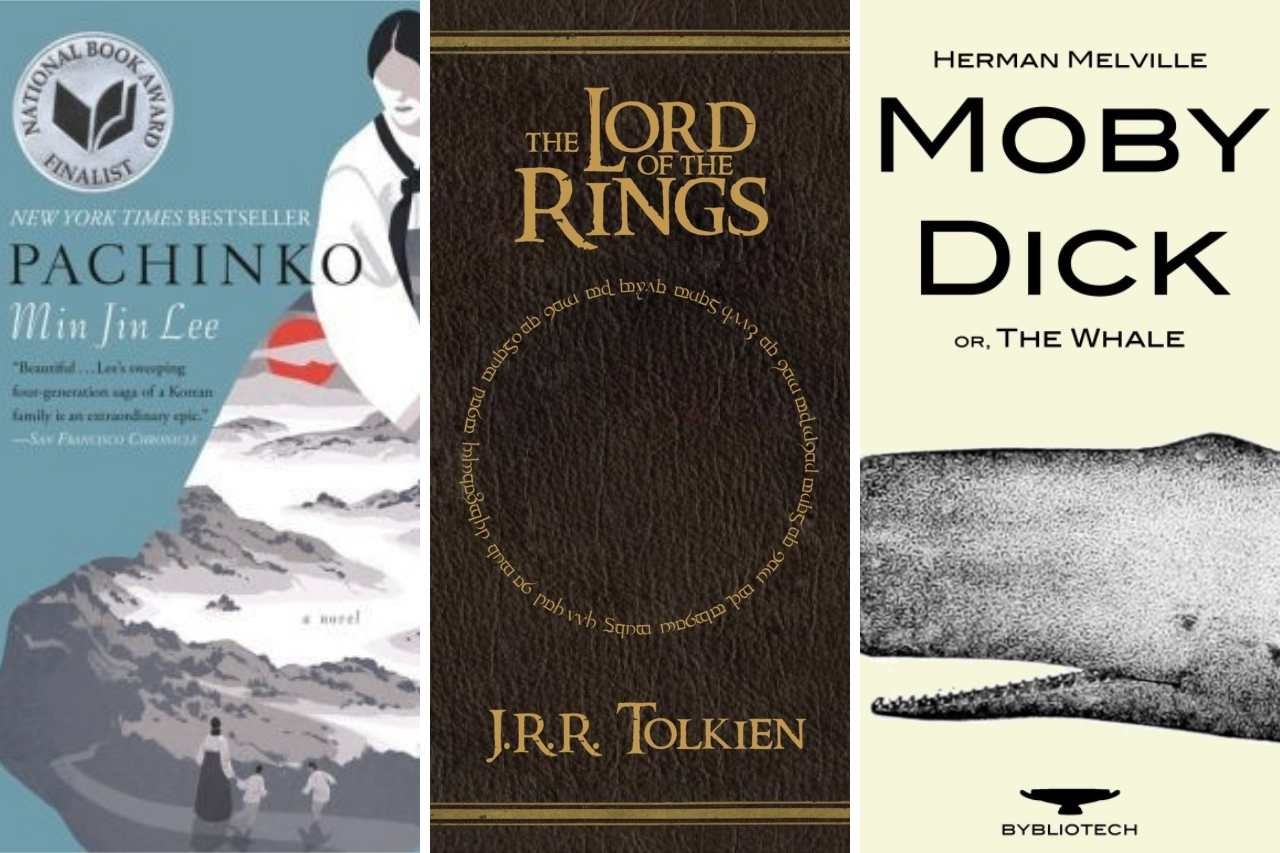
There is a particular kind of book that many readers approach with hesitation. It may sit on a shelf for months or even years, its reputation preceding it: dense, challenging, slow, demanding. These are the books people often describe as “difficult.” They require more time, more attention, and more patience than the average novel or nonfiction work. And yet, despite the effort they demand, these books are often the ones that leave the deepest and most lasting impact.
Why is that? Why do readers return—again and again—to books that challenge them? And what makes the difficulty not just tolerable, but worthwhile?
The Nature of Difficulty in Literature
To understand why difficult books matter, we first need to define what makes a book “difficult.” Difficulty in literature can take many forms. Some books challenge readers with complex language or experimental writing styles. Others present intricate structures, nonlinear timelines, or shifting perspectives. Still others explore abstract philosophical ideas, moral ambiguity, or unfamiliar cultural contexts.
In many cases, difficulty arises because the book resists passive reading. It demands engagement. You cannot skim it; you must inhabit it. You cannot simply follow the plot; you must interpret, question, and reflect.
This kind of reading can feel uncomfortable at first. It slows you down. It forces you to confront uncertainty. But it is precisely this discomfort that creates the conditions for deeper understanding.
The Reward of Active Reading
Easy books often allow readers to remain observers. Difficult books, by contrast, turn readers into participants. They require you to actively construct meaning rather than passively receive it.
When a narrative is fragmented, you must piece it together. When a character is morally ambiguous, you must decide how to judge them. When the language is dense or symbolic, you must unpack its layers.
This process transforms reading into a kind of intellectual and emotional collaboration between the author and the reader. The reward is not just the story itself, but the experience of discovering it.
And because you have worked for that understanding, it stays with you. You remember not just what the book said, but how it made you think.
Expanding Cognitive and Emotional Capacity
Difficult books stretch your abilities as a reader. They expand your vocabulary, sharpen your analytical skills, and deepen your capacity for concentration.
But beyond the intellectual benefits, they also expand your emotional range. Many challenging works delve into complex psychological states, ethical dilemmas, or existential questions. They ask you to sit with discomfort, ambiguity, and contradiction.
In doing so, they cultivate empathy and nuance. You begin to see that human experience is rarely simple or clear-cut. You learn to hold multiple perspectives at once, to tolerate uncertainty, and to engage with ideas that do not have easy answers.
These are not just reading skills—they are life skills.
Encountering New Ways of Thinking
Some books are difficult because they come from contexts that are unfamiliar to the reader. They may reflect different cultural traditions, historical periods, or philosophical frameworks.
Engaging with such works can feel disorienting. The assumptions you bring to the text may not apply. The references may be obscure. The values may challenge your own.
But this is precisely what makes these books valuable. They expose you to ways of thinking that you might not encounter otherwise. They broaden your intellectual horizons and challenge the boundaries of your worldview.
In a world that often encourages comfort and familiarity, difficult books offer something rare: genuine intellectual expansion.
The Role of Language and Form
Many difficult books experiment with language and form. They push the boundaries of what literature can do. This might involve unconventional syntax, stream-of-consciousness narration, or innovative structural techniques.
At first, this can be frustrating. The familiar rules of storytelling seem to dissolve. But as you adjust to the new form, you begin to see its purpose.
These techniques are not arbitrary; they are often essential to the book’s meaning. The way a story is told can be as important as the story itself. A fragmented narrative might reflect a fractured psyche. A nonlinear timeline might mirror the workings of memory.
By engaging with these forms, you develop a deeper appreciation for the artistry of writing. You begin to see literature not just as a vehicle for stories, but as a medium capable of expressing complex and subtle ideas.
The Satisfaction of Mastery
There is a unique satisfaction that comes from finishing a difficult book. It is not the same as the pleasure of a fast-paced, entertaining read. It is quieter, deeper, and more enduring.
You feel a sense of accomplishment—not just because you reached the end, but because you understood something that once seemed inaccessible. You have expanded your capabilities as a reader. You have climbed a small intellectual mountain.
This sense of mastery can be addictive in the best way. It encourages you to seek out new challenges, to push your boundaries further, and to continue growing.
Building Patience and Discipline
In an age of constant distraction, difficult books offer a countercultural experience. They require sustained attention and focus. They cannot be consumed in short bursts between notifications.
Reading such books becomes an exercise in discipline. You learn to slow down, to reread passages, to sit with confusion rather than immediately seeking clarity elsewhere.
This kind of patience is increasingly rare—and increasingly valuable. It strengthens your ability to engage deeply with any complex task, whether it is reading, thinking, or problem-solving.
The Depth of Lasting Impact
Many of the books that readers describe as life-changing are not the easiest ones. They are the ones that challenged them, unsettled them, and forced them to think in new ways.
These books often linger long after you have finished them. You find yourself returning to their ideas, reinterpreting their meanings, and seeing new connections over time.
This lasting impact is not accidental. It is a direct result of the effort you invested in reading them. Because you engaged deeply, the book becomes part of your intellectual and emotional landscape.
When Difficulty Becomes a Barrier
It is important to acknowledge that not all difficulty is meaningful. Some books may feel difficult simply because they are poorly written, overly obscure, or inaccessible without context.
The key distinction is whether the difficulty serves a purpose. Does it enrich the reading experience, or does it obstruct it? Does it invite deeper engagement, or does it push the reader away?
Learning to recognize this difference is part of becoming a more discerning reader. Not every difficult book is worth the effort—but many are.
How to Approach Difficult Books
For those who want to engage with challenging literature, a few strategies can make the experience more rewarding:
- Read slowly and deliberately. Allow yourself to pause, reflect, and reread.
- Take notes. Writing down thoughts, questions, and observations can clarify your understanding.
- Accept uncertainty. You do not need to understand everything immediately.
- Discuss with others. Conversations can खुल uncover perspectives you might have missed.
- Be patient with yourself. Difficulty is not a sign of failure; it is part of the process.
Over time, what once felt difficult may become more accessible. Your reading muscles strengthen, and your confidence grows.
The Value of Challenge
Ultimately, the value of difficult books lies in their ability to challenge us. They resist simplicity in a world that often demands it. They ask more of us—and in doing so, they give more in return.
They remind us that reading is not just about entertainment, but about exploration. Not just about comfort, but about growth.
To read a difficult book is to engage in an act of intellectual courage. It is a willingness to step beyond the familiar, to grapple with complexity, and to embrace the unknown.
And while the journey may not always be easy, it is almost always worth it.
Because on the other side of that difficulty lies something rare and powerful: a deeper understanding—not just of literature, but of the world and of ourselves.