


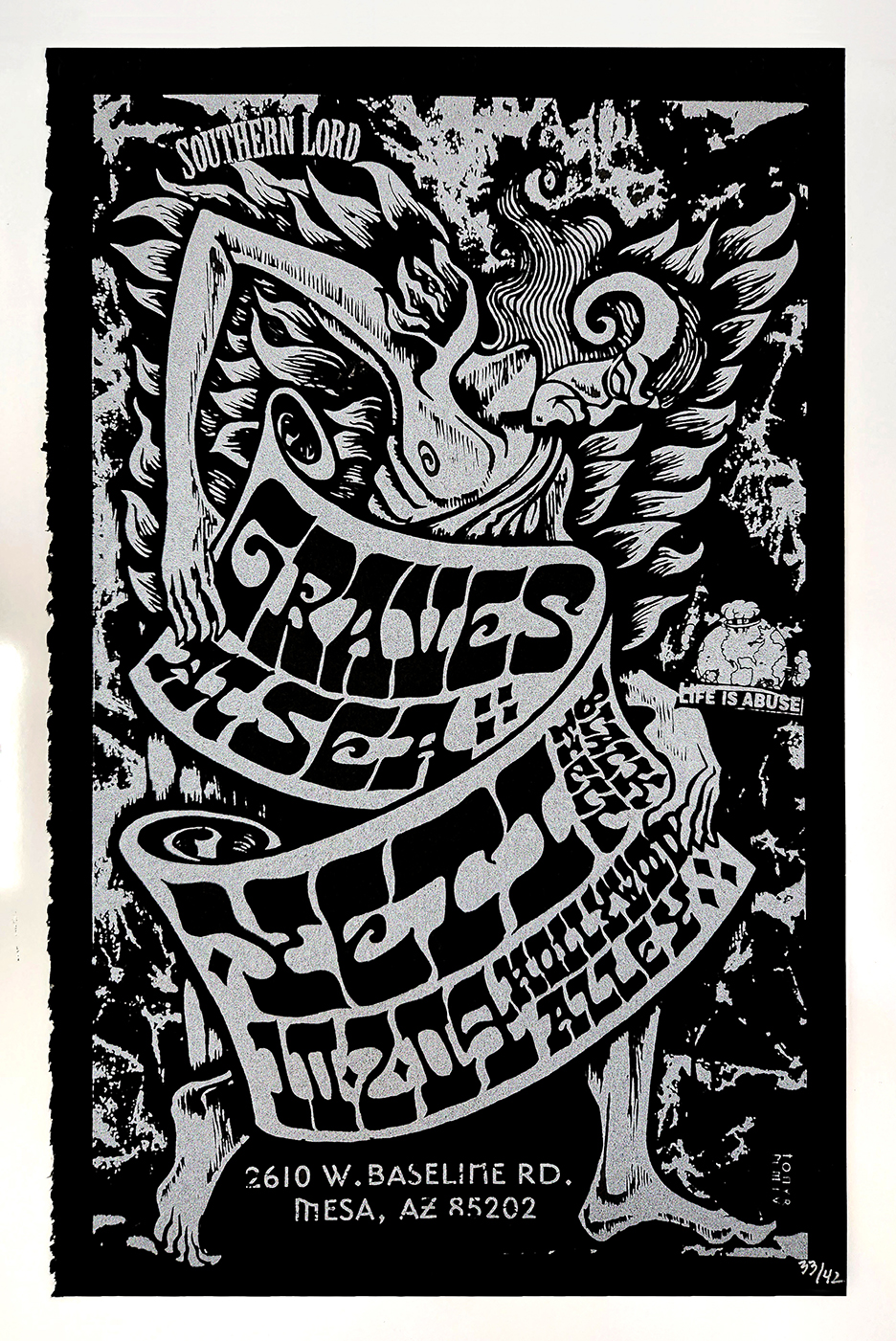
Long before Instagram feeds, Facebook posts, digital billboards, and viral TikToks, there was another medium competing for people’s attention: the printed poster.
It appeared on walls, shop windows, railway stations, cafés, theaters, street corners, and public squares. It announced concerts and exhibitions, advertised products, promoted films, communicated political ideas, recruited soldiers, introduced new fashions, and invited people to public events.
In many ways, the poster was the social media feed of the physical city.
People did not scroll through it. They walked past it.
And just like today’s social media, the poster had only a few seconds to make someone stop, look, understand, and perhaps act.
The City as a News Feed
Imagine walking through a major European city at the end of the nineteenth century. There are no smartphones and no digital advertising screens. Newspapers provide information, but they require people to actively buy and read them.
Posters work differently.
They find you.
A brightly colored image on a wall announces a theater performance. A few streets later, another promotes a new product. Around the corner, a poster invites people to a public gathering. Somewhere else, a dramatic illustration advertises a cabaret or exhibition.
Together, these messages create something remarkably similar to a modern feed: a constantly changing stream of information, entertainment, advertising, culture, and persuasion.
The wall becomes a platform.
The street becomes the interface.
And pedestrians become the audience.
Designed for the Scroll Before Scrolling Existed
One of the most interesting similarities between posters and social media is the battle for attention.
A successful social media post has to interrupt scrolling. A successful poster had to interrupt walking.
The communication problem is almost identical.
People are usually not actively searching for the message. They are going somewhere else and thinking about something else. The designer therefore has to create an immediate visual reason to pay attention.
This explains many classic characteristics of poster design: bold typography, strong contrasts, memorable illustrations, limited text, recognizable symbols, unusual compositions, and simple messages.
A poster cannot behave like a book.
If someone needs several minutes to understand it, the poster has probably failed. Its essential message needs to be absorbed quickly, sometimes from across the street.
Today’s digital designers call this stopping the scroll. Poster designers were solving the same problem more than a century ago.
Going Viral Before the Internet
We usually associate virality with digital platforms. But ideas, images, and styles could spread rapidly long before the internet.
Posters were especially powerful because they were reproducible.
One original artwork could become hundreds or thousands of printed copies distributed across a city or even several countries. The same image could appear repeatedly in different neighborhoods, creating recognition through repetition.
Some posters became so visually distinctive that people remembered the image even when they forgot the exact message.
This is essentially branding.
An effective poster created a visual identity that audiences could recognize almost instantly. Artists such as Henri de Toulouse-Lautrec, Jules Chéret, and Alphonse Mucha demonstrated that commercial communication could also become culturally influential art.
Their work did more than sell performances or products. It shaped the visual language of an era.
Today, brands hope people will repost their campaigns. In the golden age of posters, reproduction was physical rather than digital—but the goal was surprisingly similar: create an image memorable enough to circulate.
The Original Public Comment Section
Posters also possessed something digital communication sometimes lacks: unavoidable physical context.
A poster did not exist in isolation. It existed beside other posters, advertisements, graffiti, architecture, shops, signs, and people.
Sometimes posters were pasted directly over older ones. Sometimes they were torn down, modified, written on, or covered by competing messages. Political posters could provoke counter-posters. Advertising campaigns could imitate one another. Cultural movements developed recognizable visual languages.
The street effectively became a public conversation.
Of course, people could not click “like” or leave a comment underneath a nineteenth-century poster. But they could respond socially. They could discuss it, attend the advertised event, purchase the product, tear the poster down, collect it, parody it, or create another poster opposing its message.
Interaction existed—it simply happened offline.
Posters Built Communities
Social media is powerful partly because it brings people together around shared interests. Posters historically performed a similar function.
A concert poster did more than communicate the time and location of a performance. It helped define who the event was for.
The same was true of theater posters, art exhibitions, underground music scenes, protest movements, film festivals, literary events, and nightlife.
Certain visual styles became signals of belonging.
You could sometimes look at a poster and immediately understand the cultural world surrounding it. Typography, illustration, photography, colors, and composition communicated identity before the viewer had read a single word.
That remains true today.
Think about the visual identity of a music festival, contemporary art exhibition, independent film screening, or underground club night. The poster is not simply informational. It tells potential visitors something about the community they are entering.
In that sense, posters were not merely advertising communities.
They helped create them.
Algorithms Versus Geography
There is, however, one major difference between the poster and today’s social media.
Digital platforms personalize what we see.
Two people can open the same app at exactly the same moment and encounter completely different content. Algorithms decide what appears based on behavior, interests, connections, location, and countless other signals.
The printed poster cannot personalize itself.
Everyone walking down the same street encounters approximately the same message.
Its “algorithm” is geography.
Where a poster is placed determines who is likely to see it. A poster outside a university reaches one audience. The same poster near a concert venue reaches another. A poster in a railway station communicates with commuters and travelers. One in a neighborhood café reaches a smaller local community.
Placement was therefore a form of targeting long before digital advertising invented audience segmentation.
The question was not, “Which users should we serve this ad to?”
It was, “Where should we put this poster?”
Different technology. Same strategic problem.
Why Posters Still Matter
If digital communication is faster, cheaper to distribute, measurable, interactive, and highly targeted, why do we still print posters?
Part of the answer is physical presence.
Digital content is extraordinarily temporary. A post can disappear from your screen within seconds, buried beneath an endless flow of new material.
A poster occupies space.
It can remain on a wall for days, weeks, or months. People may encounter it repeatedly on the way to work, university, a café, or home. That repetition creates familiarity.
There is also something powerful about making communication physical.
A printed poster has dimensions, texture, paper, ink, scale, and location. It belongs to a particular environment. It can become associated with a street, neighborhood, event, or period in someone’s life.
And once its original purpose disappears, something interesting can happen.
It can become an object worth keeping.
Concert posters are collected. Film posters are framed. Exhibition posters become design objects. Political posters enter museums and archives. What began as temporary communication can eventually become historical evidence.
Few people print and frame an Instagram advertisement.
But a beautifully designed poster can survive long after the event or product it promoted has disappeared.
The Feed Before the Feed
Technology has transformed communication, but many of its fundamental challenges remain surprisingly consistent.
How do you attract attention?
How do you communicate quickly?
How do you make an image memorable?
How do you reach the right audience?
How do you encourage people to participate?
How do you create a visual identity people recognize?
Social media did not invent these questions.
It simply moved them onto screens.
The printed poster had been answering them on city walls for generations.
So the next time you pass a poster on the street, consider what you are actually looking at. It is more than a piece of printed paper advertising a concert, exhibition, film, product, or event.
It is part of one of the oldest mass communication networks of the modern city.
Before followers, there were pedestrians. Before feeds, there were walls. Before impressions, there were passersby.
And long before we learned to stop the scroll, designers had already learned how to make us stop in the street.