


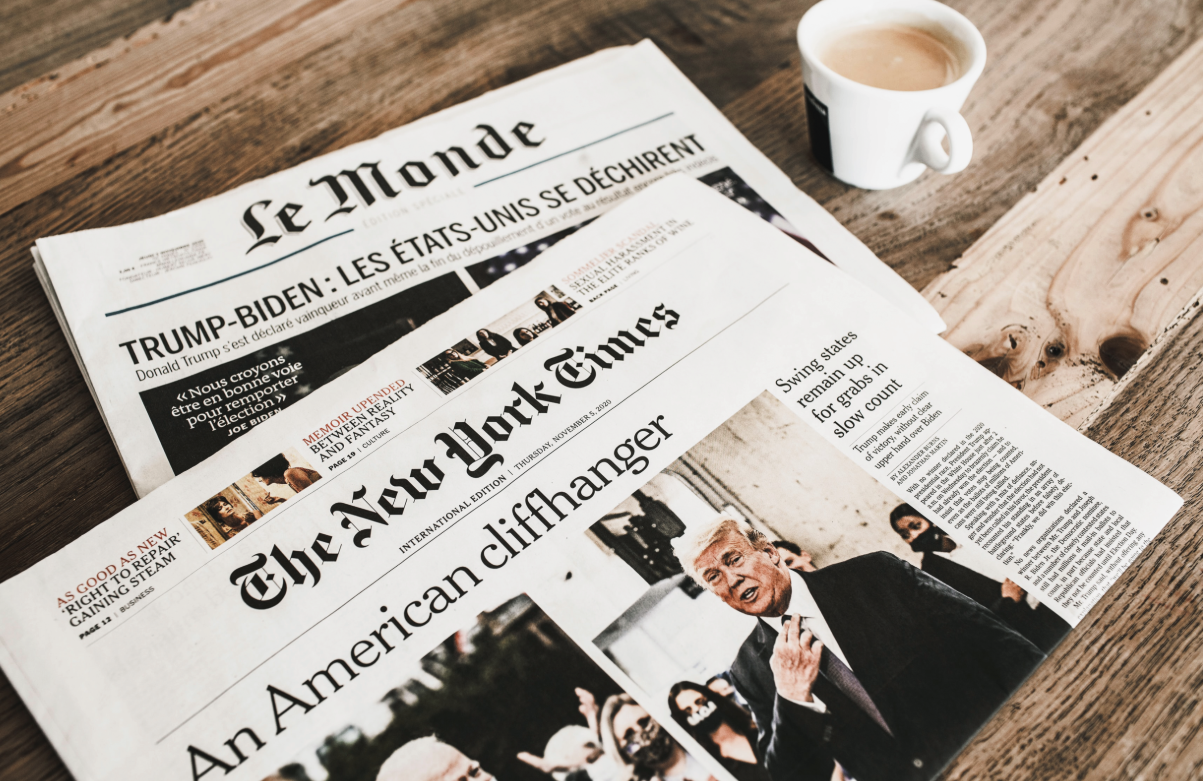
A political flyer lies on the pavement after a rally. Someone steps over it. Someone else picks it up. By evening, it may be in a rubbish bin, folded into a pocket, or pinned above a kitchen table.
The words have not changed, but the paper’s role has. It has become litter, a private possession, or a declaration of loyalty. This is what makes printed politics so interesting: its meaning depends on what people do with it.
Pamphlets, newspapers, manifestos, flyers and propaganda enter the world as physical objects. They travel through hands, occupy public space, attract suspicion and sometimes survive the movements that produced them.
A pamphlet makes an argument portable
A speech requires an audience at a particular place and time. A pamphlet lets the argument leave the room.
It can be carried to another town, lent to a neighbour, read aloud at a gathering or kept until the reader has time to consider it. Its author does not need to be present. The printer has given the words a body capable of travelling independently.
Thomas Paine’s Common Sense, published in 1776, illustrates this possibility. Its case for American independence reached readers through a relatively short, accessible publication. The pamphlet helped bring an enormous political question into the language of ordinary discussion.
The format matters. A pamphlet suggests that an issue deserves more attention than a slogan but can still be understood without reading a library. It invites the reader into an argument, then gives that reader something to pass on.
A newspaper gives politics a daily rhythm
Where a pamphlet concentrates attention on one argument, a newspaper returns repeatedly. Its influence grows through habit.
Readers encounter events alongside editorials, letters, advertisements and reports. A political position can become familiar through the selection of stories as much as through explicit persuasion. Which dispute appears on the front page? Whose suffering receives a name and a photograph? Which official explanation goes unquestioned?
These decisions create a picture of public life. Over time, a newspaper can help readers recognise themselves as members of a community with shared concerns and opponents.
Yet a newspaper’s readership extends beyond its buyers. A copy left in a café or read aloud at work becomes a small meeting place. People argue over its claims. The printed page supplies a common reference, even when nobody agrees about what it means.
A manifesto writes the future in advance
The manifesto has a different ambition. It announces what should exist.
Its sentences often speak with certainty because the document is trying to turn dissatisfaction into direction. It names a problem, identifies those responsible and proposes a transformation. Through that sequence, scattered grievances acquire a collective vocabulary.
A manifesto also draws boundaries. Readers are invited to decide whether they belong to the “we” speaking from the page. Signing, distributing or publicly endorsing it can become an act of affiliation.
This certainty carries a risk. Complex lives may be compressed into categories, and doubt may be treated as weakness. The strength of a manifesto—its ability to make action feel possible—can also encourage its followers to mistake a compelling programme for a complete understanding of society.
A flyer turns belief into an appointment
The flyer brings politics down to practical instructions: come here, on this day, at this time.
A meeting address can matter as much as an eloquent argument. Movements need people to find the hall, join the march, attend the vote or support the strike. The flyer connects a general cause to an action someone can actually take.
Its design reflects that urgency. Large lettering, a clear date and a recognisable symbol help a hurried reader grasp the message. Someone waiting for a bus may give it only a few seconds.
Distribution is political work, too. Handing out a leaflet means approaching strangers and accepting indifference, disagreement or hostility. The encounter may be brief, but it gives a campaign a human face. Behind the paper stands someone willing to be seen supporting it.
Propaganda makes paper look authoritative
Printed material can encourage debate. It can also attempt to close debate down.
Propaganda works through selective facts, emotional pressure, repetition and the construction of enemies. It may appeal to fear, pride or belonging. A complicated situation becomes a simple story, with approved heroes and convenient villains.
Paper helps that story acquire authority. An official seal, formal typography or institutional heading can make a claim appear established before anyone examines its evidence. A poster repeated across a city can make one viewpoint seem universal.
The physical medium offers no protection against deception. Careful journalism and deliberate falsehood can arrive on similar sheets. Readers must look beyond the confidence of the design and ask who produced the message, what it leaves out and whose interests it serves.
Controlling the page means controlling its movement
Political print depends on materials, machines, money and distribution. Access to a press determines which voices can reproduce themselves at scale.
Censorship therefore extends beyond banning particular sentences. Authorities can seize equipment, confiscate publications, pressure printers or punish distributors. Interfering with production and circulation may silence an argument before most people encounter it.
Under such conditions, an ordinary sheet becomes dangerous to possess. Hiding it, copying it or passing it to another person carries consequences. Paper’s apparent weakness becomes useful: it folds small, slips between other pages and moves without requiring a public broadcast.
Its circulation records trust. Each person must decide who can safely receive the next copy.
What survives the event
Eventually, political paper outlives its immediate purpose. A campaign ends. A government falls. A meeting hall closes.
The surviving flyer preserves details that grand histories sometimes overlook: an address, a demand, a local organiser’s name. A newspaper shows what readers could know at a particular moment. Handwritten notes reveal disagreement with the printed message.
Such objects remind us that political ideas reach people through specific encounters. Someone bought the newspaper, accepted the leaflet or concealed the pamphlet.
A piece of paper cannot guarantee conviction or action. It can, however, place an argument within reach—and leave evidence that someone once tried.