­
24 09, 2026
  • Limited edition, hand drawn calligraphy lettering design. Modern handwritten brush text

The Psychology of the “Limited Edition”

Why a numbered print can become more valuable simply because there are fewer of them

Imagine two books sitting side by side.

They have the same text, the same illustrations, the same paper quality, and perhaps even the same cover. One is part of a regular print run. The other has a small inscription on its first […]

23 09, 2026
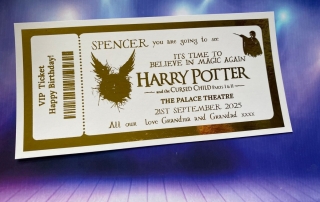
  • vsss

Why Physical Ownership Feels Different From Digital Ownership

We live in an age in which we can own thousands of things without being able to touch almost any of them.

Our books can live on an e-reader. Our photographs are stored in the cloud. Music exists inside streaming apps, films inside subscription libraries, tickets inside digital wallets, and documents somewhere in folders we rarely […]

22 09, 2026
  • ticket

Why People Keep Old Tickets, Letters and Receipts

The Emotional Life of Disposable Printed Objects
Open an old drawer, a forgotten box, or the back pocket of a rarely used bag, and you may discover a small archive of your own life.

A train ticket from a trip taken years ago. A receipt from a restaurant you barely remember. A handwritten letter. A museum ticket […]

21 09, 2026
  • bl

The Psychology of a Blank Page – Why Paper Creates a Different Creative Experience From an Empty Digital Document

A blank page and an empty digital document seem almost identical.

Both contain nothing. Both are waiting for words, sketches, calculations, plans, or ideas. Both offer the possibility of creating something that did not exist a few minutes earlier.

Psychologically, however, they can feel remarkably different.

Open a new document on a laptop and you are greeted by […]

18 09, 2026
  • paper

Why We Annotate Paper Differently From Screens

Underlining a sentence. Circling a word. Writing “important” in the margin. Adding an arrow between two paragraphs. Putting a question mark next to an idea we disagree with.

When we read something on paper, these actions often happen almost automatically. Give someone a printed report and a pen, and within a few minutes the page may […]

17 09, 2026
  • wedding-invitation

Why a Printed Invitation Feels More Important Than a WhatsApp Message

A wedding invitation arrives in the mail. You open the envelope, take out a beautifully printed card, and immediately slow down. You look at the typography, feel the texture of the paper, read the names, and perhaps keep the invitation somewhere safe.

Now imagine receiving the same information through WhatsApp:

“Hi! We’re getting married on September 20. […]

16 09, 2026
  • print

Does Printing Something Make Us More Likely to Remember It?

We live in a world where almost everything can be stored, read, and accessed digitally. We save documents to the cloud, bookmark articles, screenshot important information, and keep entire libraries of books on our phones. Yet, despite all this convenience, there is something different about reading information on paper.

Many people say they remember printed information […]

15 09, 2026
  • FA_DOCUMENT_PRINTING

Why People Treat Printed Documents More Seriously

We live in a world where most information appears on screens. Contracts are signed digitally, reports are shared through cloud platforms, invitations arrive by email, and important announcements can be distributed to thousands of people with a single click. Yet despite the convenience of digital communication, something interesting happens when information is printed on paper: […]

14 09, 2026
  • Block-Printing

Can Printing Have a Signature Style?

When we think about style in publishing, we usually think about the designer. We notice a distinctive typeface, an unusual composition, a particular color palette, or a recognizable approach to photography and illustration. But what if the printing house itself can have a style?

At first, this may sound strange. After all, a printing house receives […]

11 09, 2026
  • beau

The Most Beautiful Printing Mistakes in History

Misprints, unexpected colors, registration errors and accidental design discoveries

Printing is usually associated with precision. A page passes through presses, plates, rollers, inks and cutting machines, all carefully calibrated to reproduce an image or text as faithfully as possible. The goal seems simple: make every copy look exactly like the original.

But the history of printing tells […]