


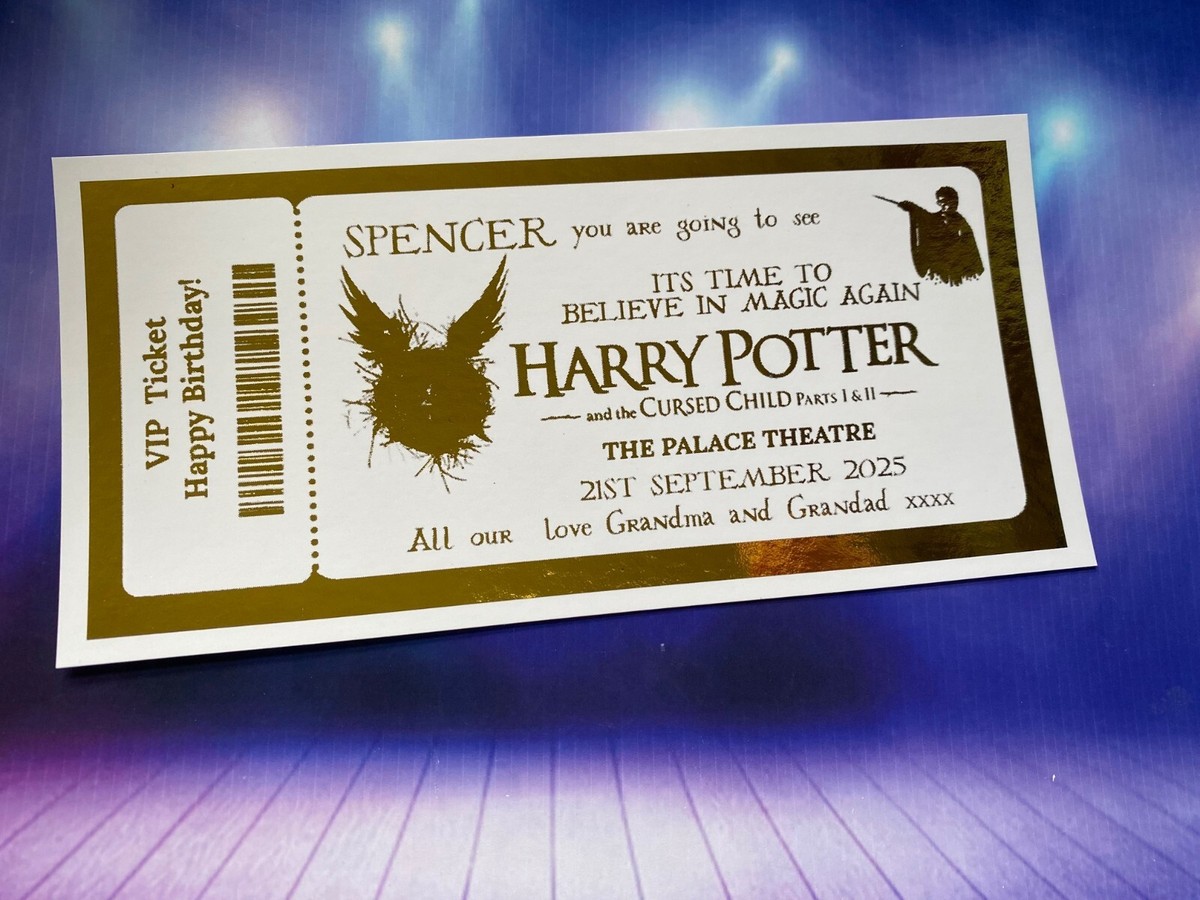
The Emotional Life of Disposable Printed Objects
Open an old drawer, a forgotten box, or the back pocket of a rarely used bag, and you may discover a small archive of your own life.
A train ticket from a trip taken years ago. A receipt from a restaurant you barely remember. A handwritten letter. A museum ticket with faded ink. A boarding pass from your first flight somewhere special. A cinema stub from a film whose plot you have long forgotten.
None of these objects were designed to be precious.
Most were made to perform a simple function and then disappear. A ticket proves that you paid for admission. A receipt records a transaction. A boarding pass gets you onto a plane. Once that function is fulfilled, the logical destination is the bin.
And yet we keep them.
Why?
Because sometimes the most disposable pieces of paper become the most powerful containers of memory.
Paper as Evidence That Something Really Happened
Digital photographs can document almost every moment of our lives, but physical objects have a different psychological quality. They occupy space. We can touch them, turn them over, notice a crease or stain, and remember exactly where they came from.
An old concert ticket does not simply tell us that we attended a concert. It was actually there.
It may have spent the evening folded inside a pocket. Perhaps we held it while standing in line. Maybe someone else touched it. It travelled home with us afterward and somehow survived every cleaning session and move that followed.
That physical continuity gives printed objects a peculiar sense of authenticity.
The ticket becomes evidence not only of an event, but of our presence within it.
“I was there.”
“I did this.”
“This was part of my life.”
For that reason, even an object worth almost nothing financially can acquire enormous personal value.
We Rarely Keep the Paper for the Paper
Imagine finding a restaurant receipt from ten years ago.
Objectively, it may contain nothing interesting: two coffees, a dessert, a date, a total and perhaps the name of the café.
But if that was the café where you had your first date with someone important, suddenly those numbers mean something entirely different.
The value has moved beyond the printed information.
The receipt has become attached to a person, a conversation, a city, a particular version of yourself.
This is what makes ordinary printed objects fascinating. Their emotional value is rarely contained in the object itself. Instead, they operate as triggers.
A train ticket can bring back the feeling of arriving somewhere alone for the first time. A museum ticket can recall an afternoon spent wandering through unfamiliar streets. A handwritten note can instantly restore someone’s voice in our imagination.
The object is small.
The memory behind it can be enormous.
Why Handwritten Letters Feel Different
Letters occupy a particularly powerful place in this world of physical memory.
Unlike a message on a screen, a handwritten letter contains traces of the person who created it.
There is pressure in the pen strokes. There are corrections, crossed-out words, uneven lines and perhaps fingerprints or marks. The handwriting itself becomes part of the message.
Even printed letters can carry physical characteristics that digital communication cannot fully reproduce: the choice of paper, the envelope, the way the page was folded, perhaps a signature at the bottom.
A digital message can preserve words perfectly.
A physical letter preserves something of the act of writing them.
This distinction becomes especially noticeable with time. Thousands of messages can disappear inside old accounts, phones and endless chat histories. A letter discovered twenty years later can feel almost like the person who wrote it has temporarily returned to the room.
Receipts: Accidental Diaries of Everyday Life
Receipts might be the strangest objects we become sentimental about.
They are perhaps the ultimate disposable print product. They are created automatically, usually glanced at for a few seconds, and frequently thrown away immediately.
But when preserved, receipts can become accidental diary entries.
They tell us where we were, when we were there and what we bought.
A receipt from a supermarket abroad might remind us of our first evening in a new country. One from a bookstore may reveal what we were reading during a particular period of our lives. A restaurant receipt can preserve the date of a celebration we had forgotten.
Unlike diaries, these objects were not created with memory in mind. That is precisely what makes them interesting.
They capture life indirectly.
We may edit the stories we tell about our past, but a receipt simply says: on this day, at this time, you were here.
The Beauty of Imperfection and Age
Old printed objects also change physically.
Ink fades. Paper becomes yellow. Corners soften. Tickets become creased. Thermal receipts slowly lose their text until they resemble blank pieces of paper.
Normally, deterioration is considered a defect.
Emotionally, however, it can become part of the object’s beauty.
The signs of aging remind us that time has passed.
A pristine reproduction of an old concert ticket would contain the same information as the original, but it would not feel the same. The original carries its own history. Its imperfections are evidence of survival.
This is one reason vintage postcards, handwritten recipes, old newspapers and family documents can feel so compelling. Paper records time not only through the information printed on it but through its physical condition.
Our Personal Archives Are Often Accidental
Most people do not deliberately decide to create an archive of their lives.
It simply happens.
One ticket goes into a drawer. A postcard is placed inside a book. A boarding pass remains between the pages of a passport. A letter stays in its envelope. Eventually these fragments accumulate.
Years later, opening that box can become a form of time travel.
Interestingly, these accidental archives often contain things we would never have thought to photograph or deliberately document. Major occasions are usually well recorded. The ordinary moments are easier to lose.
Disposable printed objects preserve some of those gaps.
They remind us not only of weddings, graduations and major journeys but of ordinary Tuesdays, cheap lunches, spontaneous train rides and evenings at the cinema.
Sometimes these minor memories become more valuable with age precisely because we did not realize they were important while they were happening.
What Happens When Everything Becomes Digital?
Today, many of these objects are disappearing.
Boarding passes live inside apps. Concert tickets arrive as QR codes. Receipts are emailed. Letters have largely become messages. Bank statements, invitations and travel confirmations increasingly exist only on screens.
There are obvious advantages. Digital documents are convenient, searchable and do not fill drawers.
But something subtle is lost when every temporary piece of information disappears into the same rectangular device.
A concert ticket, a love letter and a supermarket receipt look and feel completely different in physical form. On a phone, they are all ultimately combinations of pixels behind glass.
Physical objects create distinctions through texture, size, typography, weight and wear.
They give memories individual bodies.
Disposable Does Not Always Mean Meaningless
Printing is usually discussed in terms of communication: books communicate stories, posters communicate messages, packaging communicates brands, and documents communicate information.
But paper has another function that is harder to measure.
It can carry emotional history.
A printer producing a cinema ticket has no idea whether that ticket will be thrown away five minutes later or discovered in someone’s memory box thirty years from now. A restaurant receipt may become meaningless rubbish—or the last surviving physical reminder of an unforgettable evening.
We cannot predict which objects will become important to us.
Perhaps that is exactly why people keep them.
They are ordinary objects that accidentally become extraordinary through association.
A faded ticket is no longer simply a ticket.
A letter is no longer simply paper.
A receipt is no longer simply proof of payment.
Once memory attaches itself to an object, its original purpose becomes almost irrelevant.
The disposable becomes permanent—not because the paper was designed to survive, but because someone decided that the moment attached to it was worth keeping.