


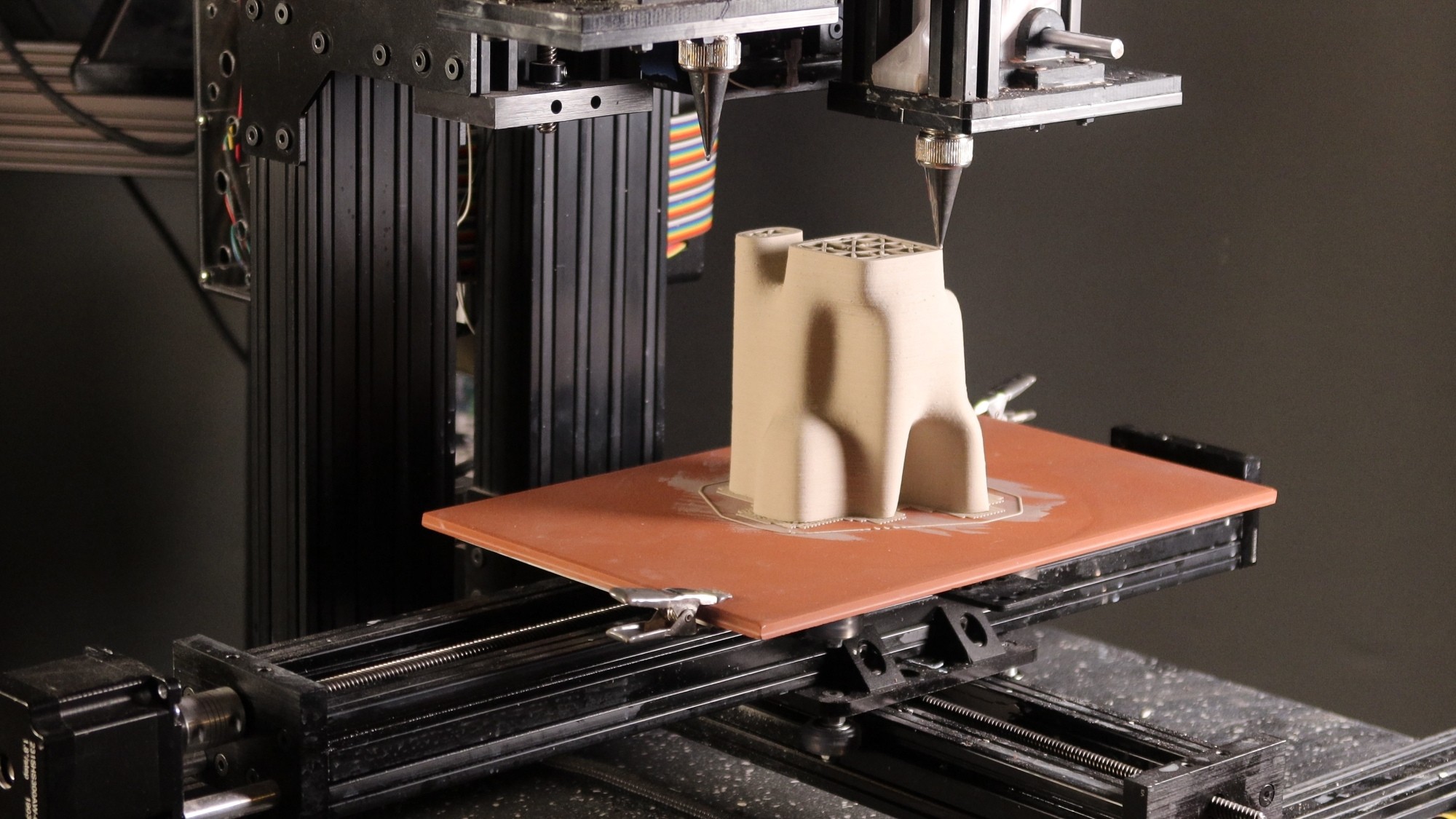
Over the past decade, 3D printing—also known as additive manufacturing—has evolved from a niche prototyping tool into one of the most transformative technologies in modern industry. What began as a way to quickly produce models has now become a powerful force reshaping how products are designed, manufactured, distributed, and even conceptualized. From aerospace components to medical implants, 3D printing is redefining the boundaries of what is possible in manufacturing and design.
This shift is not just technological—it is philosophical. Traditional manufacturing has long been constrained by tooling, cost, and scale. 3D printing breaks many of these constraints, enabling a more flexible, efficient, and creative approach to making things.
From Subtractive to Additive Thinking
At its core, 3D printing differs fundamentally from traditional manufacturing. Conventional methods—such as machining or milling—are subtractive, meaning they remove material from a solid block to create a final shape. In contrast, 3D printing is additive, building objects layer by layer using only the material required.
This seemingly simple shift has profound implications. By eliminating the need to cut away excess material, 3D printing reduces waste, lowers costs, and allows for far more complex geometries. It also enables designers to think differently—not in terms of what can be carved out, but what can be built up.
Revolutionizing Product Design
Perhaps the most significant impact of 3D printing is on design itself. Traditional manufacturing imposes strict limitations: parts must be easy to mold, machine, or assemble. These constraints often force designers to compromise between functionality, cost, and feasibility.
With 3D printing, many of these constraints disappear.
1. Unprecedented Design Freedom
3D printing allows for the creation of intricate shapes that would be impossible or prohibitively expensive using traditional methods. Complex internal channels, lattice structures, and organic forms can be produced with ease.
This opens the door to:
- Lighter yet stronger components
- Integrated parts that replace multi-piece assemblies
- Optimized geometries tailored for performance rather than manufacturability
For example, in aerospace engineering, components can now be designed with internal lattice structures that reduce weight while maintaining strength—something nearly impossible with traditional techniques.
2. Rapid Prototyping and Iteration
Design is no longer a slow, linear process. With 3D printing, prototypes can be created in hours instead of weeks.
This accelerates innovation in several ways:
- Designers can test multiple iterations quickly
- Errors can be identified and corrected early
- Time-to-market is significantly reduced
Instead of committing to a single design and investing heavily in tooling, companies can experiment freely and refine their ideas in real time.
Transforming Manufacturing Processes
Beyond design, 3D printing is fundamentally changing how products are manufactured.
1. Reduced Need for Tooling
Traditional manufacturing often requires expensive molds, dies, or tooling—especially for mass production. These upfront costs can be a major barrier, particularly for small companies or low-volume production.
3D printing eliminates or reduces the need for tooling, making it economically viable to produce:
- Small batches
- Custom parts
- Replacement components
This is especially valuable for industries like automotive repair or aerospace maintenance, where spare parts may be needed on demand.
2. Consolidation of Parts
One of the most powerful advantages of 3D printing is the ability to combine multiple components into a single part.
This leads to:
- Fewer assembly steps
- Reduced risk of mechanical failure
- Lower labor costs
A product that once required dozens of individual parts can now be printed as a single integrated unit, simplifying both production and maintenance.
3. On-Demand and Decentralized Production
3D printing enables a shift from centralized mass production to localized, on-demand manufacturing. Instead of producing large quantities in one location and shipping them worldwide, products can be printed closer to where they are needed.
This has several advantages:
- Reduced transportation costs
- Shorter supply chains
- Lower inventory requirements
In fact, additive manufacturing supports a model where digital files are distributed instead of physical goods—transforming logistics entirely.
Enabling Mass Customization
One of the most exciting aspects of 3D printing is its ability to deliver customization at scale.
Traditional manufacturing thrives on uniformity. Producing identical items in large quantities reduces costs. Customization, on the other hand, is typically expensive and time-consuming.
3D printing changes this equation.
Because objects are created directly from digital files, modifying a design does not require new tooling or significant additional cost. This makes it possible to produce customized products as easily as standardized ones.
Examples include:
- Personalized medical implants and prosthetics
- Custom-fit dental aligners
- Tailored consumer products
This shift toward mass customization is redefining consumer expectations, as people increasingly demand products that are tailored to their specific needs.
Advancing Sustainability in Manufacturing
Sustainability has become a central concern in modern manufacturing, and 3D printing offers several environmental advantages.
1. Reduced Material Waste
Because additive manufacturing uses only the material necessary to build an object, it generates far less waste than subtractive methods.
This is particularly important when working with expensive or scarce materials, such as titanium or specialized alloys.
2. Energy and Emissions Reduction
3D printing can reduce the number of steps involved in manufacturing, leading to lower energy consumption. Additionally, lighter components—especially in industries like aerospace—can significantly reduce fuel usage over time.
3. Localized Production
By enabling local, on-demand manufacturing, 3D printing reduces the need for long-distance transportation, further lowering carbon emissions.
In a world increasingly focused on sustainability, these advantages position additive manufacturing as a key technology for the future.
Expanding Material Possibilities
Early 3D printers were limited to basic plastics, but today’s systems can work with a wide range of materials, including:
- Metals such as aluminum, steel, and titanium
- Ceramics and glass
- Advanced composites
- Even biological materials
This expanding material palette is unlocking new applications across industries.
For instance:
- In healthcare, 3D printing is used to create implants and even experimental tissue structures
- In construction, it enables the printing of building components
- In consumer goods, it allows for innovative product designs with unique textures and forms
Impact Across Industries
The influence of 3D printing is being felt across a wide range of sectors:
Aerospace
Lightweight, high-performance components improve fuel efficiency and reduce costs.
Healthcare
Customized implants, prosthetics, and surgical tools enhance patient outcomes.
Automotive
Rapid prototyping and on-demand parts streamline production and maintenance.
Consumer Goods
Design innovation and personalization create new market opportunities.
Education and Research
3D printing democratizes innovation, allowing students and researchers to prototype ideas quickly and affordably.
Challenges and Limitations
Despite its many advantages, 3D printing is not a universal solution.
1. Not Ideal for Mass Production
For large-scale manufacturing of simple products, traditional methods like injection molding remain more cost-effective.
2. Speed Constraints
While ideal for prototyping and small batches, 3D printing can be slower than traditional production methods for high volumes.
3. Material and Quality Limitations
Although improving, not all materials and finishes match the quality achievable through conventional manufacturing.
4. Technical Expertise
Designing for additive manufacturing requires new skills and approaches, which can be a barrier for some organizations.
The Future of Design and Manufacturing
Looking ahead, 3D printing is poised to become even more influential. Advances in materials, speed, and automation are expanding its capabilities, while integration with technologies like artificial intelligence and cloud manufacturing is opening new possibilities.
The concept of “manufacturing as a service,” where products are printed on demand through distributed networks, is already emerging.
At the same time, designers are embracing new methodologies—such as generative design—that take full advantage of additive manufacturing’s capabilities.
Conclusion
3D printing is not just a new manufacturing technique—it is a paradigm shift. By removing traditional constraints on design, enabling rapid innovation, and transforming production processes, it is reshaping the way we create and consume products.
While it may not replace all traditional manufacturing methods, its role will continue to grow, particularly in areas where flexibility, customization, and efficiency are paramount.
In many ways, 3D printing represents the future of making things: digital, decentralized, and deeply creative.