


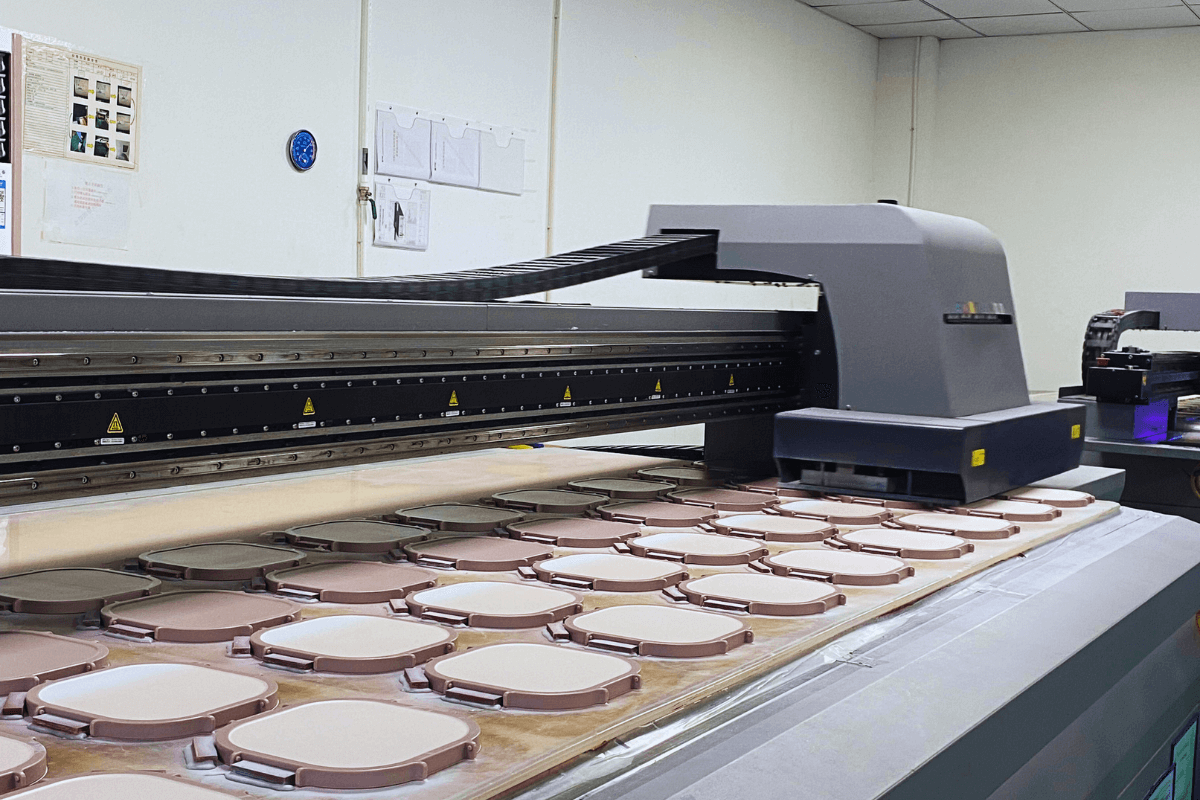
Walk into almost any modern print shop, retail environment, exhibition space, or even a small creative studio, and you’ll likely encounter the unmistakable influence of UV printing. From ultra-vivid packaging and textured business cards to custom-printed glass, wood, and metal surfaces, UV printing has rapidly moved from a niche technology to a dominant force in the printing industry. But what exactly is UV printing, and why has it become so widespread?
This article explores how UV printing works, what makes it different from traditional methods, and why it has become one of the most in-demand technologies in contemporary printing and design.
What Is UV Printing?
UV printing (short for ultraviolet printing) is a digital printing method that uses ultraviolet light to instantly cure or dry ink as it is printed. Unlike traditional printing techniques—where ink dries through absorption into the material or evaporation—UV printing involves a chemical reaction triggered by UV light.
Here’s how it works in simple terms:
- Special UV-curable inks are applied to a surface.
- Immediately after application, UV lamps expose the ink to ultraviolet light.
- This exposure causes the ink to harden (or cure) almost instantly.
The result is a print that is dry the moment it leaves the printer—no waiting, no smudging, and no need for additional drying processes.
The Key Difference: Instant Curing vs. Traditional Drying
To understand why UV printing is so impactful, it helps to compare it with conventional printing methods.
In traditional printing:
- Ink is absorbed into the material (like paper).
- Or it dries through evaporation (solvent-based inks).
- Drying can take time and may require heat or airflow.
In UV printing:
- Ink sits on top of the material rather than soaking in.
- UV light instantly cures it into a solid layer.
- The process is fast, precise, and highly controlled.
This fundamental difference opens the door to a range of creative and practical possibilities that were previously difficult or impossible to achieve.
Why UV Printing Is Everywhere Now
The rapid rise of UV printing isn’t accidental. It’s the result of several powerful advantages that align perfectly with modern design, manufacturing, and business needs.
1. Versatility Across Materials
One of the most significant strengths of UV printing is its ability to print on almost any surface.
Unlike traditional methods that are often limited to paper or specific coated materials, UV printing works on:
- Glass
- Wood
- Metal
- Acrylic
- Plastic
- Leather
- Ceramics
- Textiles (in some cases)
This versatility has transformed industries such as interior design, product manufacturing, and advertising. Businesses can now print directly onto finished products rather than relying on labels or secondary processes.
For example:
- A glass panel can be printed with a full-color design.
- A wooden surface can feature intricate branding.
- A phone case can be customized with high-resolution imagery.
This flexibility is a major reason why UV printing has expanded beyond print shops into manufacturing and product design.
2. Exceptional Print Quality
UV printing produces incredibly sharp, vibrant, and detailed images. Because the ink sits on the surface rather than being absorbed, colors appear more saturated and defined.
Key quality benefits include:
- High resolution and fine detail
- Rich, vivid colors
- Crisp text and lines
- Smooth gradients
Additionally, UV printers often support white ink and varnish layers, which allow for:
- Printing on dark or transparent surfaces
- Creating highlights and contrast
- Adding depth and dimension
This level of control is particularly valuable in branding, packaging, and premium print products.
3. Instant Drying = Faster Production
Time is a critical factor in modern production, and UV printing dramatically reduces turnaround times.
Because prints are cured instantly:
- There is no drying time.
- Items can be handled immediately.
- Production workflows become faster and more efficient.
This is especially important for:
- On-demand printing
- Short-run production
- Custom orders
Businesses can fulfill orders more quickly, reduce bottlenecks, and improve overall productivity.
4. Durability and Longevity
UV-cured ink forms a tough, durable layer on the surface of the material. This makes UV prints highly resistant to:
- Scratching
- Fading
- Moisture
- Chemicals
- UV exposure (sunlight)
As a result, UV printing is ideal for both indoor and outdoor applications, including:
- Signage
- Industrial labeling
- Promotional products
- Decorative panels
Compared to traditional prints that may require lamination for protection, UV prints often don’t need additional finishing.
5. Eco-Friendlier Than Traditional Methods
Sustainability is becoming a major concern across industries, and UV printing offers several environmental advantages.
Unlike solvent-based printing:
- UV inks contain fewer volatile organic compounds (VOCs).
- There is minimal ink evaporation into the air.
- Energy consumption can be lower due to faster processing.
Additionally:
- Less waste is generated (no need for drying sheets or coatings).
- Printing is more precise, reducing material overuse.
While UV printing isn’t completely impact-free, it is generally considered a more environmentally responsible option compared to many traditional methods.
6. Creative Possibilities: Texture and Effects
UV printing isn’t just about flat images—it can also create texture.
By layering ink or adding varnish, designers can produce:
- Raised surfaces (emboss-like effects)
- Gloss and matte contrasts
- Spot UV highlights
- Tactile patterns
This opens up new creative directions in:
- Packaging design
- Business cards
- Book covers
- Art prints
For example, a logo can be printed with a raised glossy finish while the background remains matte, creating a striking visual and tactile contrast.
7. Customization and Personalization
We are living in an era of personalization, where consumers expect products tailored to their preferences.
UV printing makes customization easier than ever:
- No need for plates or setup changes
- Ideal for one-off prints or small batches
- Quick switching between designs
This is particularly valuable for:
- Personalized gifts
- Branded merchandise
- Limited-edition products
Whether it’s printing a single custom phone case or producing a small run of unique packaging, UV printing supports flexibility without sacrificing quality.
Industries Transformed by UV Printing
The impact of UV printing extends across multiple sectors.
Retail and Advertising
UV printing is widely used for:
- Signage
- Window displays
- Point-of-sale materials
Its durability and vibrancy make it perfect for high-visibility environments.
Packaging
Brands use UV printing to create premium packaging with:
- Unique textures
- High-end finishes
- Strong visual identity
This is especially important in cosmetics, luxury goods, and specialty foods.
Interior Design
UV printing allows designers to print directly onto:
- Glass panels
- Tiles
- Furniture surfaces
This enables fully customized interiors with unique visual elements.
Manufacturing and Industrial Use
UV printing is used for:
- Product labeling
- Control panels
- Decorative finishes on manufactured goods
Its precision and durability make it suitable for technical applications.
Are There Any Limitations?
Despite its many advantages, UV printing is not without challenges.
- Equipment cost: UV printers are generally more expensive than traditional digital printers.
- Material compatibility: While versatile, some materials may still require surface treatment for optimal adhesion.
- Ink flexibility: UV-cured ink can be less flexible, which may be an issue for materials that bend or stretch.
However, ongoing technological advancements continue to address these limitations.
The Future of UV Printing
UV printing is not just a trend—it’s a foundational shift in how printing is approached.
As technology evolves, we can expect:
- Faster and more affordable machines
- Improved ink formulations
- Greater material compatibility
- Integration with automation and smart manufacturing
The line between printing and product creation will continue to blur, with UV printing playing a central role in that transformation.
Conclusion
UV printing has become “everywhere” because it solves multiple problems at once: speed, quality, durability, and versatility. It aligns perfectly with the needs of modern businesses and creative industries, where customization, efficiency, and visual impact are essential.
What once required multiple processes can now be done in a single step. What was once limited to paper can now be applied to almost any surface. And what used to take time can now happen instantly.
In a world that values both speed and individuality, UV printing isn’t just another printing method—it’s a technology that redefines what printing can be.