


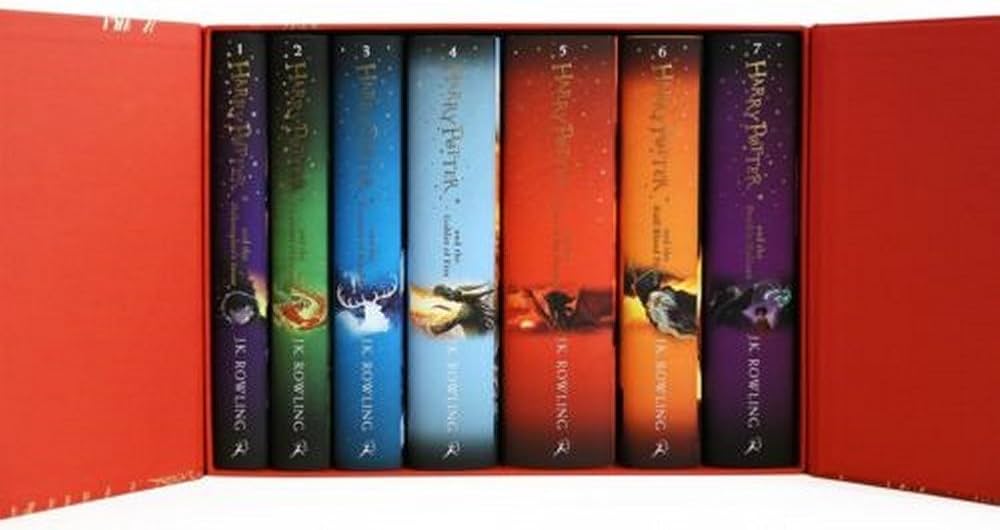
For a long time, print was expected to disappear quietly.
As screens multiplied, feeds accelerated, and content became infinite, the logic seemed simple: why print something once information could be updated endlessly, shared instantly, and consumed without physical limits? Large print runs gave way to digital-first strategies, warehouses emptied, and publishers learned to think in clicks rather than copies.
And yet, in a paradox that defines our cultural moment, print did not vanish. Instead, it evolved.
Today, limited-edition print runs are returning—not as nostalgic gestures or stubborn resistance to digital media, but as a deliberate, strategic, and deeply cultural choice. From books and magazines to brand publications, art editions, and independent journals, scarcity has become a value, tactility a language, and permanence a statement.
This return is not about going backward. It is about redefining what print means in an age of excess.
From Mass Distribution to Meaningful Objects
Historically, large print runs were a necessity. Printing was expensive, distribution was slow, and scale was the only way to make publishing viable. Success was measured in circulation numbers, reach, and ubiquity.
Digital media reversed this logic. Distribution became free, infinite, and instantaneous. Anyone could publish anything, at any time, for anyone. In theory, this democratized content. In practice, it created saturation.
The result? A cultural environment where abundance erodes attention.
Limited-edition print runs emerge as a counterbalance to this reality. They reject the idea that more is better and instead propose that less can mean more. Not more readers—but more engaged ones. Not more copies—but more meaning per copy.
A limited print run transforms a publication from a disposable carrier of information into an intentional object. It signals that the content inside is not meant to be skimmed, scrolled past, or algorithmically forgotten. It is meant to be held, kept, and returned to.
Scarcity as Cultural Language
Scarcity, when artificial and cynical, feels manipulative. But when aligned with intention, it becomes expressive.
Limited-edition print runs communicate values before a single word is read. They suggest care, selectivity, and editorial confidence. They say: this was not made for everyone—and that is precisely why it matters.
In an age where content competes for attention through volume and speed, limitation introduces a pause. It slows down consumption and reframes reading as an act rather than a habit.
For readers, scarcity changes behavior. People are more likely to:
-
Spend time with the publication
-
Read it cover to cover
-
Preserve it instead of discarding it
-
Assign personal or symbolic value to it
A limited-edition book or magazine becomes closer to an artwork than a product. Ownership becomes participation.
Print as an Experience, Not a Channel
One of the most significant shifts driving the return of limited print runs is the redefinition of print itself. Print is no longer expected to “compete” with digital media on speed or reach. It operates on an entirely different register.
Digital is immediate. Print is immersive.
Digital is fluid. Print is fixed.
Digital is endless. Print is finite.
Limited-edition print leans into these qualities rather than apologizing for them. It treats physical constraints as strengths.
Paper choice, typography, binding, layout, weight, texture, smell—these elements become part of the narrative. The publication is not just a container for content; it is content.
This experiential dimension cannot be replicated digitally. And crucially, it does not need to be.
Instead of asking print to do everything, limited editions allow it to do one thing exceptionally well: create depth.
Editorial Confidence in the Age of Algorithms
Algorithms favor predictability. They reward repetition, trend-following, and content that fits established patterns. Editorial confidence, by contrast, requires risk.
Limited-edition print runs are acts of editorial courage.
When you produce a fixed number of copies, you accept that there will be no endless optimization, no post-publication tweaking, no chasing of metrics in real time. What is printed is final. This finality demands clarity of vision.
Editors and publishers behind limited editions must ask sharper questions:
-
Why does this need to exist in print?
-
Who is this truly for?
-
What makes this worth preserving?
This discipline often leads to stronger content. Fewer compromises. Less filler. More intentional storytelling.
In this sense, limited print runs are not only a format choice but an editorial philosophy—one that values coherence over virality and substance over scalability.
Brands, Identity, and Limited Print
The return of limited-edition print is not confined to traditional publishing. Brands across fashion, hospitality, architecture, gastronomy, and culture are embracing print as a way to articulate identity rather than sell products.
For brands, limited print runs serve several purposes:
-
They create cultural capital.
A beautifully produced, limited publication positions a brand as a cultural participant, not just a commercial actor. -
They deepen relationships.
Instead of reaching millions superficially, brands can engage thousands—or hundreds—meaningfully. -
They slow the brand narrative.
Print allows brands to move beyond campaigns and into long-form storytelling, reflection, and values. -
They resist disposability.
In contrast to ephemeral ads, a limited-edition publication can live on shelves, in archives, and in memory.
Importantly, these publications are rarely transactional. They are not meant to convert immediately. Their value lies in long-term perception, trust, and resonance.
Sustainability and Conscious Production
At first glance, printing fewer copies might seem like a purely aesthetic or cultural choice. But it is also increasingly an ethical one.
Large print runs often lead to waste—unsold copies, returns, pulping. Limited-edition runs, by contrast, align production with actual demand. They encourage responsible printing, better materials, and longer lifespans for physical objects.
When a publication is designed to be kept rather than discarded, its environmental footprint shifts. Durability replaces disposability. Purpose replaces excess.
This does not mean print becomes inherently “green,” but it does mean it becomes more honest. Limited editions acknowledge that physical production carries responsibility—and they respond by making each copy count.
Community Over Mass Audience
Perhaps the most profound impact of limited-edition print runs is how they redefine audience.
Instead of anonymous readership, limited publications cultivate communities. Readers recognize themselves as part of a smaller circle, connected by shared interests, values, or aesthetics.
This sense of belonging is powerful. It turns readers into advocates, collectors, and collaborators. It encourages dialogue rather than passive consumption.
In many cases, limited print runs are accompanied by events, launches, discussions, or exhibitions—further reinforcing the idea that print is not just read, but lived.
The Paradox of Permanence
In a world obsessed with real-time updates, the permanence of print feels radical.
Once printed, a text cannot be edited, corrected, or optimized. It exists as a snapshot of thought, culture, and intention at a specific moment in time. This vulnerability is precisely what gives print its authority.
Limited-edition print runs embrace this paradox. They do not promise timeless relevance. They promise honesty.
They say: this mattered enough, at this moment, to be fixed in physical form.
And in doing so, they create archives for the future—evidence that not all meaning was reduced to data streams and disappearing stories.
Conclusion: Less, but Better
The return of limited-edition print runs is not a trend driven by nostalgia or resistance to technology. It is a thoughtful response to a cultural environment defined by speed, excess, and impermanence.
Limited print does not try to outpace digital media. It offers something digital cannot: slowness, depth, materiality, and intention.
As publishers, brands, and creators rethink what it means to communicate meaningfully, limited-edition print runs stand as a reminder that value is not created by scale alone. Sometimes, it is created by restraint.
In choosing to print less, we may finally be saying more.