


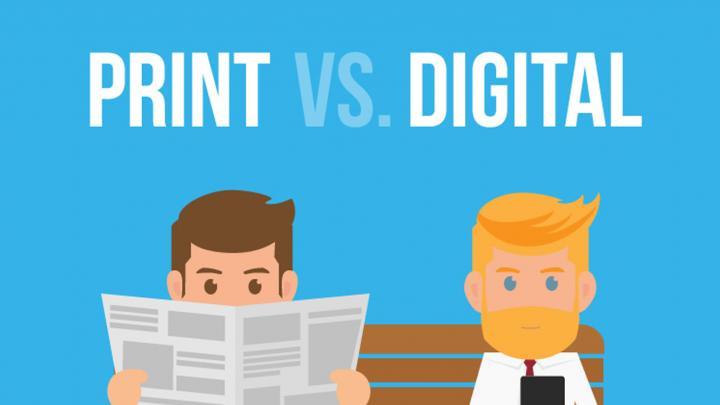
In today’s hyperconnected world, businesses communicate with their audiences through countless digital channels. Websites, social media platforms, email newsletters, online advertisements, and mobile applications have transformed the way brands share information. At the same time, traditional print materials—from books and magazines to brochures, catalogs, packaging, and direct mail—continue to play a significant role in marketing and communication.
As companies increasingly shift their budgets toward digital media, a critical question remains: Which medium builds more trust—print or digital?
The answer is more nuanced than choosing one over the other. Both print and digital have unique strengths, but research, consumer behavior, and psychological factors consistently reveal that print enjoys a distinct advantage when it comes to credibility, attention, and long-term trust. Understanding why can help businesses create more effective communication strategies and stronger relationships with their audiences.
The Foundation of Trust
Trust is one of the most valuable assets a brand can possess. Consumers are exposed to thousands of messages every day, making them more skeptical than ever before. Before making a purchase, subscribing to a service, or engaging with a company, people ask themselves important questions:
- Is this information reliable?
- Is this company legitimate?
- Does this brand care about quality?
- Can I trust what I am reading?
The medium through which information is delivered influences how audiences answer these questions.
While content quality is essential, the format in which that content is presented also affects perception. The same message can be received very differently depending on whether it appears in a printed publication or on a digital screen.
Why Print Is Often Perceived as More Trustworthy
1. Print Feels More Permanent
One of the primary reasons people trust print is its permanence. Printed materials require greater investment in production, design, and distribution. Because they cannot be instantly edited, deleted, or replaced, they often appear more deliberate and carefully considered.
A printed annual report, magazine, or book suggests that the publisher stands behind the content. Readers tend to view printed information as more stable and authoritative than online content that can change at any moment.
This perception creates an important psychological advantage. People often associate permanence with accountability, and accountability strengthens trust.
2. Higher Perceived Quality
Print naturally conveys a sense of craftsmanship. The choice of paper, printing techniques, binding methods, textures, and finishes all contribute to the user experience.
A beautifully printed brochure or premium catalog communicates attention to detail before a single word is read. Consumers often interpret this investment in quality as a reflection of the brand itself.
When a company produces high-quality printed materials, it sends a subtle message:
“We care enough about our customers to invest in how we communicate with them.”
That message builds confidence and credibility.
3. Less Exposure to Misinformation
Digital environments have become crowded with misinformation, fake news, clickbait headlines, sponsored content, and low-quality information sources.
Consumers know this.
As a result, many people approach online content with skepticism. They frequently question the accuracy of information and the motivations behind it.
Printed materials do not entirely eliminate misinformation, but they are often associated with stronger editorial standards and greater oversight. Traditional newspapers, magazines, journals, and books have historically maintained review processes that contribute to their credibility.
Because of this history, readers often perceive printed information as more reliable.
4. Greater Focus and Attention
Trust grows when people engage deeply with information.
Digital environments are designed for speed. Users scroll quickly, switch between tabs, respond to notifications, and consume content in short bursts. As a result, attention is fragmented.
Print creates a different experience.
When someone sits down with a magazine, brochure, or book, they are less likely to be interrupted by pop-up notifications, advertisements, or competing content. This focused attention allows readers to process information more thoroughly.
Research consistently shows that people tend to spend more time with printed materials and retain information more effectively when reading on paper.
The more deeply people engage with content, the more likely they are to trust it.
The Challenges of Trust in Digital Media
Digital communication offers tremendous advantages, including speed, accessibility, personalization, and global reach. However, these strengths can also create challenges.
Information Overload
Every day, consumers encounter countless online messages competing for attention.
Emails flood inboxes.
Social media feeds never stop updating.
Advertisements appear across websites and applications.
As the volume of content increases, trust often decreases. Audiences become more selective about what they believe and whom they trust.
The Rise of Fake Content
Artificial intelligence, manipulated images, fake reviews, and misleading information have made it increasingly difficult for consumers to determine what is authentic.
This uncertainty affects trust across the digital landscape.
Even reputable organizations must work harder to prove their credibility online.
Short Attention Spans
Digital communication often prioritizes immediacy over depth.
Brands frequently rely on short-form content, quick updates, and rapid engagement tactics. While these approaches can generate visibility, they do not always foster lasting trust.
Trust generally develops through meaningful experiences, consistent messaging, and sustained engagement—qualities that can be difficult to achieve in fast-moving digital environments.
Where Digital Builds Trust Successfully
Although print enjoys advantages in credibility, digital media excels in several areas that contribute to trust.
Transparency
Digital platforms allow organizations to communicate openly and continuously with their audiences.
Customers can:
- Read reviews
- Ask questions
- View ratings
- Watch demonstrations
- Access customer support
- Verify company information
This transparency can strengthen trust when managed effectively.
Real-Time Communication
Digital channels enable immediate responses to customer concerns.
When brands respond quickly and honestly, they demonstrate accountability and reliability.
This responsiveness can build strong relationships over time.
Social Proof
Online reviews, testimonials, case studies, and community discussions provide powerful evidence of trustworthiness.
Consumers often trust recommendations from other customers more than traditional advertising.
Digital platforms make this social proof highly visible and accessible.
The Psychology Behind Print Trust
Neuromarketing studies have revealed fascinating insights into how people process printed and digital information differently.
Printed materials engage multiple senses simultaneously. Readers physically hold the material, turn pages, and interact with textures and formats.
These sensory experiences create stronger emotional connections and memory formation.
Digital content, while convenient, often feels more temporary and transactional.
The physical presence of print can create a sense of authenticity that digital experiences sometimes struggle to replicate.
This is one reason luxury brands, universities, financial institutions, and premium retailers continue to invest heavily in printed materials despite advances in digital technology.
They understand that trust is often built through experience, not simply information.
Industry Examples
Financial Services
Banks, investment firms, and insurance companies continue to use printed reports, statements, and informational materials because customers associate printed documents with security and legitimacy.
When dealing with sensitive financial decisions, trust is paramount.
Healthcare
Healthcare organizations frequently rely on printed materials for patient education, medical information, and institutional communications.
Patients often perceive printed resources as more credible than online sources.
Luxury Brands
Luxury brands use premium packaging, printed catalogs, and high-quality publications to reinforce exclusivity and quality.
The physical experience becomes part of the brand’s value proposition.
Education and Publishing
Despite the growth of e-books and online learning platforms, printed books remain highly trusted educational resources.
Students and professionals often prefer printed materials for deep learning and long-term retention.
Why the Future Is Not Print vs Digital
The real question is no longer whether print or digital is better.
The most successful organizations recognize that trust is built through a combination of channels.
Digital provides reach, convenience, and immediacy.
Print provides credibility, attention, and permanence.
Together, they create a powerful communication ecosystem.
A customer may discover a company through social media, research it online, read reviews on its website, receive a printed brochure, and ultimately make a purchase.
Each touchpoint contributes to trust in a different way.
Rather than replacing print, digital media has increased the value of trusted physical communication. In a world saturated with screens, high-quality printed materials often stand out more than ever.
Conclusion
When it comes to building trust, print continues to hold a significant advantage. Its permanence, perceived quality, credibility, and ability to capture attention make it one of the most trusted forms of communication available.
Digital media remains essential for modern businesses, offering speed, accessibility, and interactive engagement. However, the challenges of information overload, misinformation, and constant distraction can make trust harder to establish online.
The strongest brands understand that trust is not built through a single channel. Instead, it emerges through consistent, authentic communication across both print and digital platforms.
In an increasingly digital world, print has not lost its relevance. If anything, its ability to convey credibility and create meaningful connections has become even more valuable. Businesses that strategically combine the strengths of both mediums will be best positioned to earn and maintain customer trust for years to come.