


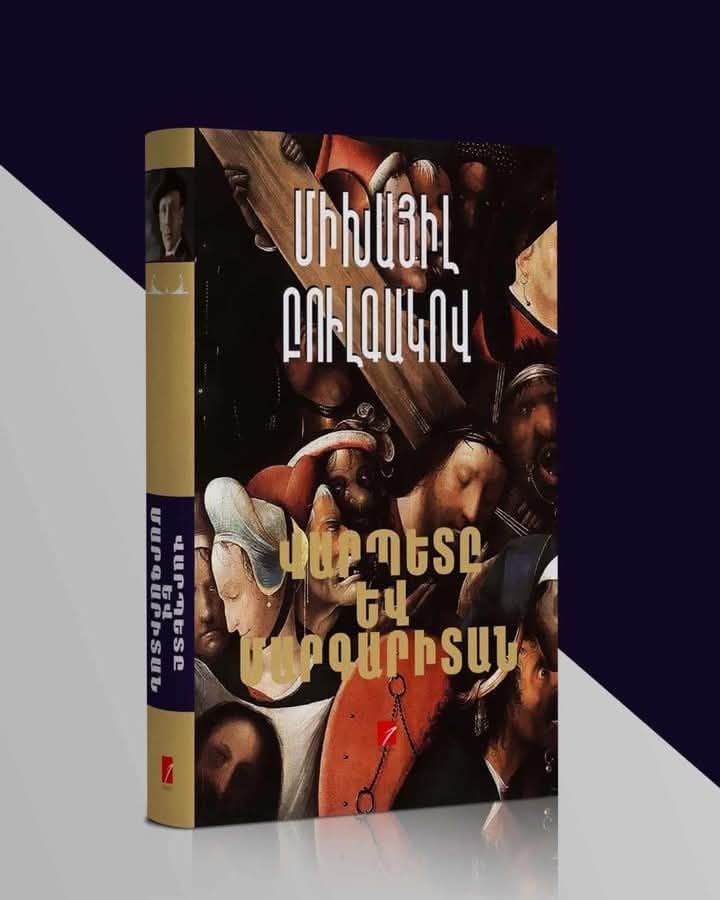
Few novels of the twentieth century strike the reader with the layered intensity, surreal humor, and moral urgency of The Master and Margarita. Written by the Russian author Mikhail Bulgakov over many years during the oppressive climate of Stalinist USSR and published only after his death, this novel has evolved into one of the definitive masterpieces of world literature. Its blend of supernatural chaos, philosophical depth, biting satire, and tragic romance gives it a timeless quality — one that continues to enthrall and puzzle readers across cultures and generations.
In this deep dive, we’ll explore the novel’s core themes, its historical and cultural context, the mechanisms of its satire, and why — decades after its conception — it remains profoundly relevant.
A Brief Overview: Plot Without Spoilers
At its surface, The Master and Margarita tells two seemingly disparate stories.
One follows the Devil — under the guise of a mysterious foreigner named Woland — who arrives in 1930s Moscow with his bizarre, demonic retinue. Through a series of strange and often hilarious events, Woland exposes the hypocrisy, greed, and spiritual emptiness of Soviet society.
The other unfolds as a narrative within the narrative: the tragic love story of the Master, an embattled writer, and his beloved Margarita. Their fates are intertwined with a dramatic retelling of the trial of Yeshua Ha-Notsri (Jesus of Nazareth) before Pontius Pilate.
These threads — the satirical Moscow episodes, the metaphysical dialogue with good and evil, and the tender romance — weave together into a work that defies genre and easy categorization.
Historical Context: Writing Under the Shadow of Stalin
To fully grasp The Master and Margarita, one must understand the world in which Bulgakov wrote.
Bulgakov began the novel in 1928, but the oppressive cultural policies of Joseph Stalin’s Soviet Union made its publication impossible during his lifetime. The regime demanded literature that served state ideology, especially “socialist realism,” which glorified Communist principles and rejected religious or metaphysical explorations. Bulgakov’s work, by contrast, was irreverent, spiritual, and deeply skeptical of Soviet bureaucratic culture.
He worked on the manuscript intermittently throughout the 1930s, under circumstances marked by censorship, ill health, and personal frustration. At one point Bulgakov even wrote to Stalin asking for help, lamenting that his plays were banned and that he felt unable to write at all under such conditions. Stalin’s response was reportedly sympathetic but ultimately ineffective in loosening state control.
Bulgakov died in 1940, leaving The Master and Margarita unpublished and unfinished in its current form. The novel was first released in censored form in 1966–1967, with the full text appearing only in the late 1970s. This history of suppression deeply informs the novel’s tone — a mix of mockery, defiance, yearning, and philosophical inquiry.
Major Themes Explored
1. The Nature of Good and Evil
At its heart, The Master and Margarita is a novel about moral ambiguity. Woland — the Devil — is not a simple villain. He is philosophical, perceptive, and at times even just. Meanwhile, many characters who consider themselves virtuous reveal greed, cowardice, and hypocrisy.
By complicating traditional notions of morality, Bulgakov suggests that good and evil are not abstract forces but are shaped by human choices, fear, and moral responsibility.
2. The Power of Art and Truth
The Master is a writer who has authored a novel about Pontius Pilate — a work that deeply unsettles the Moscow literary establishment. His struggle mirrors Bulgakov’s own experience: the artist confronting a system that fears art’s capacity to reveal uncomfortable truths.
Through this storyline, Bulgakov explores the vulnerability of the artist in an authoritarian society. What happens when imagination, conscience, and spiritual inquiry collide with ideological demands? The Master’s despair — and Margarita’s unwavering belief in his work — embody both the fragility and resilience of artistic truth.
3. Love as Redemption
Amid satire and metaphysical speculation, the novel delivers one of literature’s most powerful love stories. The bond between the Master and Margarita is sacrificial, passionate, and transformative. Margarita’s willingness to risk everything — even entering a pact with supernatural forces — for love gives the novel its emotional gravity.
Their devotion stands in sharp contrast to the self-interest and moral emptiness of many other characters, underscoring love’s redemptive power.
4. Satire of Soviet Society
Bulgakov’s satire is precise and relentless. Literary officials, bureaucrats, informers, and social climbers are exposed through absurd encounters orchestrated by Woland and his entourage. The Moscow elite, obsessed with status and material comfort, become victims of their own greed and pretension.
The humor is sharp but purposeful: Bulgakov uses laughter to dismantle fear, revealing how easily a society loses its ethical grounding when truth is replaced by conformity.
Why the Supernatural Matters
The novel’s supernatural elements — demons, witches, magic performances, and surreal transformations — serve more than entertainment. They rupture the illusion of rational, controlled reality promoted by Soviet ideology and reintroduce mystery, morality, and metaphysical depth.
In a society that officially denied spirituality, Bulgakov’s supernatural universe insists that reality cannot be reduced to ideology or materialism alone.
A Story Within a Story
One of the novel’s greatest strengths is its layered structure. The Moscow narrative and the Jerusalem narrative mirror and illuminate each other.
-
Moscow represents chaos, hypocrisy, and spiritual emptiness.
-
Jerusalem offers introspection, moral conflict, and questions of conscience.
Together, they deepen the novel’s philosophical scope, inviting readers to consider how power, fear, and moral responsibility operate across time.
The Devil as Philosopher
Woland is one of literature’s most complex portrayals of the Devil. He is cruel but fair, mocking yet insightful. Rather than corrupting souls, he exposes what already exists within them.
In a world shaped by propaganda and denial, Woland functions as a dark truth-teller — forcing characters to confront their own moral failures.
Why the Novel Endures
Universal Questions
Freedom, truth, love, and moral responsibility are timeless concerns. Bulgakov addresses them with a boldness that transcends historical context.
Satire That Still Resonates
The mechanisms of censorship, opportunism, and performative loyalty depicted in the novel remain recognizable in many modern societies.
A Rare Tonal Balance
Comedy and tragedy coexist seamlessly. Few novels can be simultaneously hilarious, terrifying, romantic, and philosophical.
Spiritual Depth Without Dogma
The novel explores faith and morality without prescribing belief, leaving room for interpretation and reflection.
Global Impact and Legacy
Since its publication, The Master and Margarita has been translated into dozens of languages and adapted into films, plays, operas, and artworks. Its imagery — flying through the night sky, shadowy theatrical performances, the eternal torment of Pilate — has become part of global cultural memory.
Readers across the world continue to find in Bulgakov’s work a mirror of their own societies and inner conflicts.
Conclusion
The Master and Margarita endures because it refuses to simplify the human condition. It challenges power, celebrates love, defends artistic freedom, and insists on moral accountability — all while dazzling the reader with imagination and wit.
It is not merely a novel about a specific time or place, but a work that speaks to the eternal tensions between truth and fear, freedom and control, love and despair. In that sense, Bulgakov’s masterpiece remains as urgent and alive today as ever.