


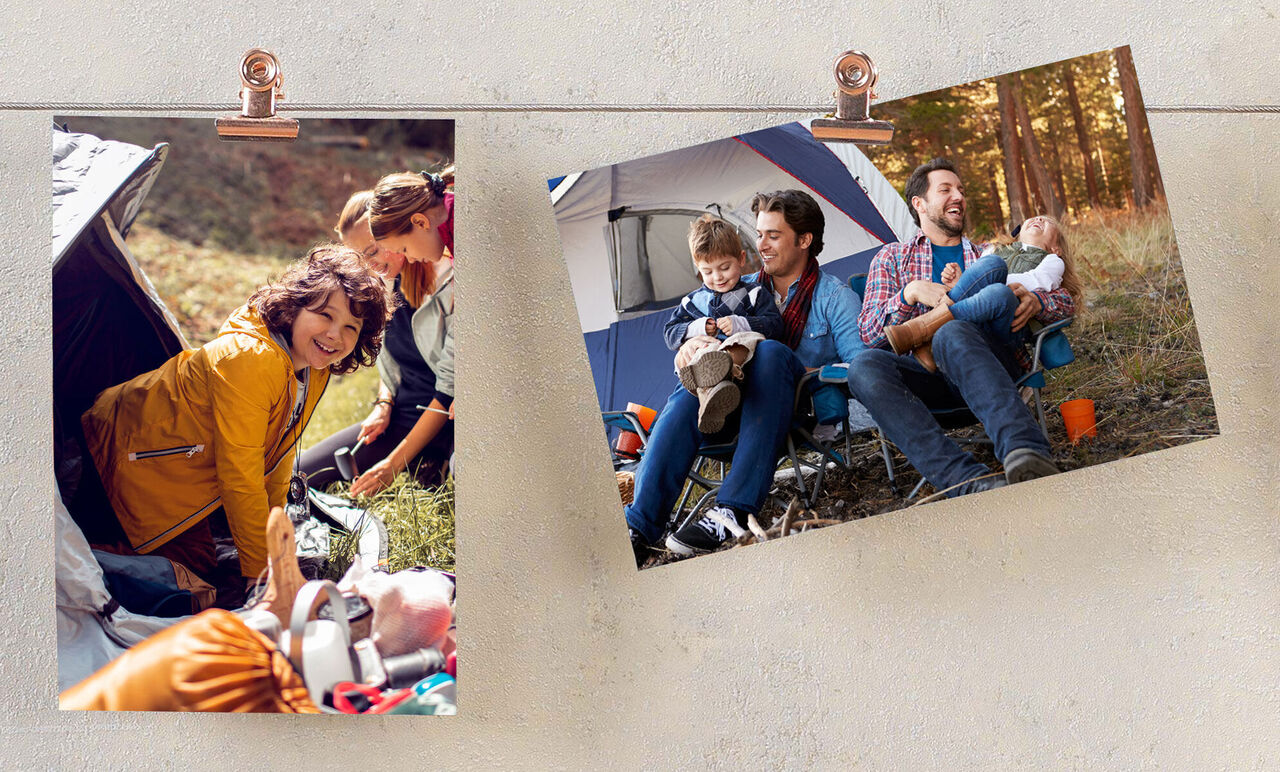
We live in a time when almost everyone carries a camera everywhere. A single smartphone can hold thousands, sometimes tens of thousands, of photographs. We photograph our breakfasts, birthdays, sunsets, pets, travels, friends, concerts, hotel rooms, streets, receipts, and moments that seem insignificant at the time. We take several versions of the same picture, just in case one turns out better.
And yet, despite having more photographs than any generation before us, we print remarkably few of them.
That contradiction is fascinating. Photography has never been easier, faster, or more abundant. But the physical photograph has not disappeared. Instead, it has acquired something that digital images often lack: rarity.
A printed photograph occupies space. It has an edge. It can be touched, framed, carried in a wallet, placed inside a book, pinned to a wall, or discovered years later in a drawer. Unlike a photograph buried somewhere in a phone’s camera roll, it announces its existence.
Perhaps that is precisely where its strange power comes from.
We Have Too Many Photographs
The modern photograph is almost weightless. We can take a picture without thinking about cost, film, developing, or even storage. If we do not like it, we delete it. If we are uncertain, we keep it.
The result is an enormous accumulation of visual memories.
But abundance changes our relationship with images. When photographs are nearly unlimited, individual photographs can become less important. A picture may be meaningful, but it exists among hundreds of nearly identical images. The moment becomes part of an endless stream rather than a singular object.
Think about a typical holiday. Someone might take hundreds of photographs during a week-long trip. They may photograph the airport, the hotel, every meal, every museum, every street, every sunset and dozens of selfies. Months later, those photographs remain somewhere in a phone or cloud storage.
But how many are actually printed?
Usually, only a handful.
And those few photographs suddenly become different.
Printing Turns a Moment into an Object
A digital photograph is an image. A printed photograph is an object.
That distinction may sound simple, but it changes how we experience memory.
When we print a photograph, we make a decision: This one matters.
Printing requires selection. From hundreds of photographs, we choose perhaps ten. From ten, perhaps three. The act of choosing gives those images significance.
A printed photograph is therefore not merely a reproduction of a digital file. It is a physical declaration of importance.
It says: Remember this.
This is one reason people often print photographs of weddings, children, family gatherings, important journeys, old homes, or people who are no longer alive. The photograph becomes more than documentation. It becomes an object connected to a particular person, place, or period of life.
The Photograph Becomes Part of the Environment
There is another difference between digital and printed images: physical photographs can exist around us.
A photograph on a phone requires us to open the phone, find the application, search the camera roll, and scroll through hundreds of other images.
A photograph on a desk does not.
You see it while drinking coffee. You pass it on the wall. You notice it while looking for something in a drawer.
Printed photographs become part of the physical landscape of our lives.
This is especially powerful because memory is often triggered by unexpected encounters. Finding an old photograph inside a book can transport us to a completely different period. A picture tucked into a wallet can suddenly remind us of a person we have not thought about for years.
The photograph does not need to be searched for.
It finds us.
Imperfection Makes It More Human
Digital photography encourages perfection. We can retake a photograph immediately. We can edit brightness, remove imperfections, adjust colors, crop the composition, and choose the best expression.
Printed photographs preserve the decision that was made.
Sometimes that means preserving imperfections, too.
A slightly blurry photograph can become precious. Someone may be looking away from the camera. The lighting may be strange. Part of the image may be accidentally cropped. Yet those imperfections can make the photograph feel authentic.
A perfect image can show what something looked like.
An imperfect photograph can show what it felt like to be there.
This is one reason old family photographs can be so emotionally powerful. They were not created for algorithms, social media feeds, or carefully constructed personal brands. They were simply records of people being together.
The Photograph Has a Material Language
Paper also contributes to the meaning of a photograph.
Its size, surface, color, thickness, and finish affect how we perceive the image. A small matte photograph can feel intimate and personal. A large glossy print can feel more formal or dramatic. A photograph printed on textured paper can resemble an art object.
Even the physical aging of paper becomes part of the story.
A photograph may fade slightly. Its corners may bend. Fingerprints may appear on its surface. The paper may become softer with time.
These changes do not necessarily diminish the photograph. They can increase its emotional value.
The physical object records not only the moment photographed but also the years that have passed since the photograph was made.
Why We Still Print
Perhaps we print photographs because we instinctively understand that memory needs anchors.
Digital photographs are excellent for documenting everything. Printed photographs are better at reminding us what we considered worth keeping.
There is something meaningful about limiting ourselves.
When we have infinite photographs, choosing one becomes an act of editing our own history. We cannot print everything, so we have to decide which moments deserve physical space.
And physical space is valuable.
A photograph on a wall competes with books, furniture, objects, and architecture. A photograph inside a wallet competes with cards and receipts. A photograph inside a family album becomes part of a carefully organized collection of memories.
The limitation gives the image weight.
A Small Photograph in an Infinite World
The printed photograph may seem old-fashioned in an age of cloud storage, smartphones, artificial intelligence, and endless digital archives. But perhaps its continued existence is not accidental.
We do not print photographs because digital photography has failed.
We print them because digital photography has succeeded too well.
We have reached a point where taking photographs is effortless, but remembering them is not. We can preserve almost everything, yet preservation alone does not create meaning.
A printed photograph forces us to pause.
To choose.
To touch.
To keep.
That tiny rectangle of paper can become a doorway to a person, a place, a conversation, a journey, or a version of ourselves that no longer exists.
In a world where millions of images can disappear into a camera roll without ever being seen again, the printed photograph has an unexpected advantage: it refuses to disappear quietly.
It sits on the table.
It stays inside the album.
It waits in the drawer.
And years later, when we find it again, we may realize that the photograph was never just a picture.
It was a piece of memory that we gave a physical form.