


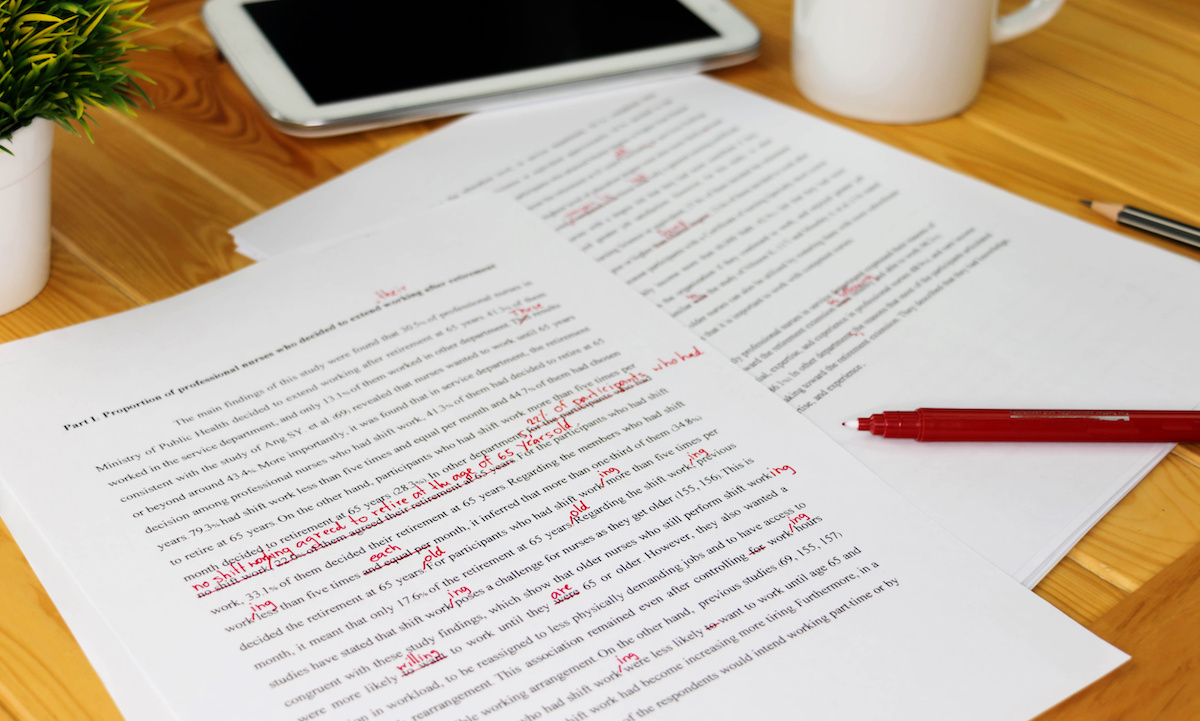
In an era defined by information overload, rushed publishing cycles, and the pressure to generate ever-increasing volumes of content, the copy editor stands as one of the last—and most essential—guardians of editorial integrity. Whether in traditional publishing, digital media, academic presses, or corporate communications, the role of the copy editor extends far beyond fixing commas or catching typos. It is, at its core, about safeguarding truth, clarity, credibility, and the reader’s trust. Without the careful and deliberate intervention of a skilled copy editor, even the most brilliant writing can falter—and the reputation of a publisher can erode.
This article explores the multi-layered role of copy editors, how their expertise upholds editorial standards, and why their contribution is more important than ever in a rapidly evolving media environment.
1. Copy Editing as a Pillar of Accuracy
One of the primary functions of a copy editor is to ensure accuracy. Although writers are responsible for their own research, even the most diligent authors can miss small factual inconsistencies, misquote sources, or misinterpret data. Copy editors act as a crucial filter, applying a second (and often third) layer of scrutiny.
Accuracy extends far beyond checking names and dates. It involves:
-
Ensuring data presented aligns with cited sources
-
Fact-checking claims that may be contentious or ambiguous
-
Correcting misused terminology or jargon
-
Identifying logical inconsistencies or contradictions
-
Confirming that references, citations, and attributions follow correct standards
In fields like journalism, academic publishing, and scientific communication, accuracy is directly tied to credibility. A single unchecked mistake can undermine an entire publication. For publishers working in politically or socially sensitive areas, fact-checking becomes not only a professional responsibility but a moral one. Copy editors serve as the frontline defense against misinformation—intentional or accidental.
2. Guardians of Clarity and Readability
Good writing means more than grammatically correct writing. It must be readable, coherent, and engaging. Copy editors are trained to look beyond surface-level errors and assess the text as a whole.
They consider:
-
Sentence structure and flow: Is the argument logical? Does the text move naturally from one idea to the next?
-
Tone and consistency: Does the author maintain a steady voice? Are stylistic choices aligned with the publication’s standards?
-
Readability and accessibility: Is the text overly complex, repetitive, or unclear? Could the message be conveyed more simply?
By refining phrasing, improving transitions, and shaping readability, copy editors help writers communicate more effectively with their audience. In this sense, the editor becomes a partner in storytelling—enhancing the message while keeping the author’s intent intact.
3. Enforcing Style and Editorial Standards
Every reputable publication has its own style guide—whether based on existing systems like APA, MLA, Chicago, AP, or a house-specific adaptation. These standards govern everything from punctuation and capitalization to structure, formatting, and tone.
Copy editors play a central role in applying and preserving these standards, ensuring that:
-
A publication speaks with a unified voice
-
The reader navigates content without distraction
-
Articles maintain a professional and polished appearance
-
Inconsistencies do not erode trust or confuse meaning
Style guides are particularly important in large media outlets, academic journals, and publishing houses where multiple authors contribute to the same body of work. Without consistent editorial standards, the experience becomes uneven—and the publication risks losing its identity.
4. Ethical Responsibility: Keeping Bias in Check
Preserving editorial integrity is not only about correctness; it is about fairness and ethics. In subtle and sometimes unconscious ways, writers may introduce bias, problematic framing, or misleading implications. A copy editor’s job includes identifying and addressing these moments.
Examples include:
-
Loaded or overly emotional language
-
Cultural or gender stereotypes
-
Unbalanced representation of different viewpoints
-
Omission of key context that could alter interpretation
Editors intervene not to censor the writer’s perspective but to ensure that content remains responsible, respectful, and journalistically sound.
In a world where readers are increasingly aware of bias and manipulation in media, ethical editing is no longer optional—it is essential to maintaining credibility.
5. Protecting Authors from Unintentional Liability
From defamation and plagiarism to copyright violations and unsupported claims, the risks facing modern publishers are numerous. Copy editors act as an essential risk-management mechanism.
They help prevent:
-
Libelous statements by ensuring accuracy and fairness
-
Copyright issues by verifying permissions and citations
-
Plagiarism by catching suspicious similarities or missing attributions
-
Misleading headlines or summaries that distort the content
Given the legal consequences that can arise from even small oversights, the editor’s role is not only protective but strategic. They help publishers maintain professional integrity while safeguarding against reputational damage.
6. The Balance Between Preserving the Author’s Voice and Improving the Text
A skillful copy editor knows that editing is not rewriting. The goal is to elevate the text, not reshape it into something that feels artificial or disconnected from the author’s original style.
Maintaining this balance requires:
-
Sensitivity to tone
-
Awareness of the author’s intention
-
Clear communication
-
Respect for creative expression
The best editing is almost invisible—readers benefit from clarity and precision without noticing the changes. That subtlety is a mark of professional excellence.
7. Copy Editors in the Digital Age
Digital transformation has altered nearly every aspect of the editorial process, introducing new tools, new challenges, and new expectations. Copy editors today work across a wide range of formats, including:
-
Articles and long-form essays
-
Blog posts and newsletters
-
Social media content
-
Marketing and branding materials
-
Multimedia scripts
-
Website and UX copy
Each medium has its own rules and demands. Short-form content, for example, requires rapid precision and tight deadlines, while academic publishing relies on meticulous structure and cross-referencing. The modern editor must be adaptable, technologically savvy, and capable of working with advanced tools such as AI-assisted proofreading systems, collaborative platforms, and digital style guides.
Yet technology does not diminish the need for human judgment. Automated tools can catch spelling mistakes, but they cannot reliably identify nuance, context, tone, bias, or ethical concerns. In fact, as more content is generated by AI, the need for human editorial oversight grows even stronger.
8. Sustaining the Reader’s Trust
At the heart of editorial integrity lies a simple but powerful expectation: the reader must be able to trust what they are reading.
That trust rests on:
-
Reliability
-
Professionalism
-
Accuracy
-
Ethical responsibility
-
Consistency
Copy editors protect this trust every day, often working behind the scenes and without recognition. They ensure that a publication’s values are reflected not only in its mission statement but in the quality of its content.
9. The Invisible Heroes of Publishing
Despite their vital contributions, copy editors rarely receive public acknowledgment. Yet their influence is everywhere—on the page, on the screen, and in the credibility of every respected publication. They act as collaborators, quality-control specialists, and the custodians of a publication’s reputation.
In an industry driven by speed and constant demand for new material, their work provides something irreplaceably valuable: integrity.
Conclusion
In a world overflowing with information, where the line between truth and noise can blur with alarming ease, copy editors are essential in preserving the standards that allow publishing to function as a trusted institution. Their work upholds accuracy, clarity, ethics, and cohesion—while honoring the writer’s original vision.
Editorial integrity is not merely a professional value; it is the foundation upon which meaningful communication is built. And it is the copy editor who keeps that foundation strong.